






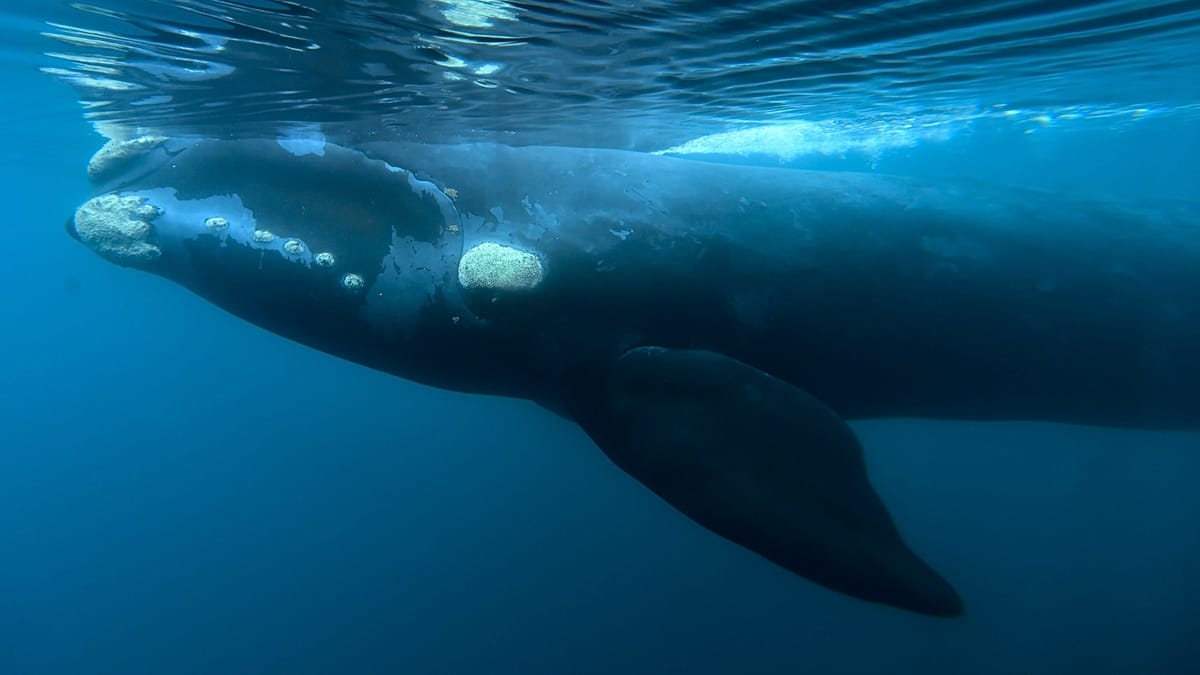
Hundreds of southern right whale calves have died in recent months in Argentine Patagonia, raising alarms among scientists and officials. Initial investigations suggest a bacterial infection may be to blame for this unusually high mortality rate this season.
This week, dozens of deceased whale calves were found on beaches in the Chubut province, an area crucial for breeding these whales in the South Atlantic. Since June, cases of calf deaths have been reported.
“The mortality rate among calves is quite high, especially this season,” said Mariano Coscarella, a researcher at the Marine Mammals Laboratory of the National Scientific and Technical Research Council (Conicet).
Veterinarians are investigating the possibility that erysipelas, a bacterial infection commonly found on the skin of these mammals, could be responsible for the deaths. Chubut authorities noted that early analyses indicate a common marine bacterium as a potential cause, but investigations are ongoing to confirm the exact origin of the fatalities. Coscarella mentioned that while current evidence leans towards a natural cause, the influence of human activity cannot be entirely dismissed.
The provincial government is collaborating with the scientific community to determine the cause of this troubling event.
Puerto Madryn and the nearby Valdés Peninsula are significant breeding grounds for the southern right whale, where many whales come annually to mate and nurse their calves. Adults can grow up to 17 metres long and weigh about 40 tonnes. In 2025, a record 2,110 whales were spotted in the area, including around 800 juveniles. This year, numbers are down to 1,375, which include nearly 400 calves, according to Coscarella.
Despite the elevated death toll this season, Coscarella believes it does not currently pose a medium-term threat to the region’s whale population, partly due to the species’ longevity, with southern right whales living for about 60 years.


