


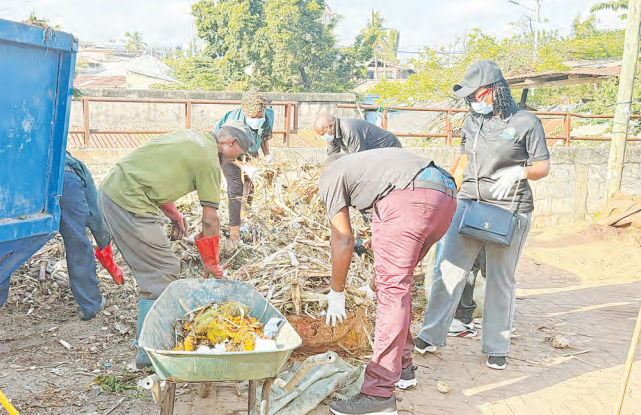
DAR ES SALAAM: Recycling Agricultural Waste into Fertiliser
Market traders at Tandale Market in Dar es Salaam are recognising the value of what many consider worthless waste, such as banana peels, leftover vegetables, and unsold fruits. These organic materials can be transformed into fertiliser, providing a significant boost to crop production.
By properly separating waste at its source, traders can send organic materials to a processing plant in Mabwepande, Kinondoni, where they will be turned into fertiliser. This approach aligns with the initiative “Waste Is an Opportunity,” which promotes the idea that waste can be a resource that supports economic activity and environmental conservation.
The Tanzania Fertiliser Regulatory Authority (TFRA) is spearheading this campaign, encouraging communities to distinguish between biodegradable and non-biodegradable waste. The authority is also collaborating with local governments to enhance cleanliness and responsible waste management.
In conjunction with World Fertiliser Day on October 13, TFRA is extending its awareness campaigns throughout October. Activities include a clean-up exercise at Tandale Market on October 17, 2026, where traders and residents will learn how their waste can become valuable materials for fertiliser production.
TFRA Principal Quality Controller, Ms Esther Kapakala, emphasised the need for the public to change how they view waste. “We’re encouraging people to separate their waste properly so it can be used to produce fertiliser. When biodegradable waste is mixed with plastics, it becomes challenging to obtain clean materials,” she explained.
She added that materials like banana peels and fruit remnants could be processed into useful fertiliser, reducing the waste headed for landfills. TFRA’s outreach efforts have broadened to educate more people, including traders and farmers, about the benefits of not discarding biodegradable waste.
The potential for recycling is evident at Tandale Market, where approximately 10 tonnes of biodegradable waste is generated daily. Market Manager Mr Awadhi Shabani explained that a system for separating this waste has been implemented to protect the environment and supply materials for fertiliser production.
Although some traders and residents still struggle to identify biodegradable waste, the market has designated collection areas for different waste types. Mr Shabani noted, “We believe waste is an opportunity. Proper separation makes this process more efficient.”
Kinondoni Municipal Council Sanitation Officer, Mr Alban Mgabuso, highlighted the significance of collaborating with TFRA to enhance waste management in markets. He stated that waste should be sorted into biodegradable, dry, and hazardous categories to ensure effective handling and processing.
The council is encouraging a system known as “sorting at source” to facilitate easier collection and processing. Mr Mgabuso pointed out that unsold fruits and vegetables make up a large portion of market waste and should be properly separated to maximise their potential for fertiliser production.
This initiative reflects a broader effort to redefine waste management, linking it to commerce, cleanliness, and agriculture. The participation of local traders and residents is crucial to the system’s success as they can facilitate the separation process, ensuring that organic materials are suitable for recycling.
In Tanzania, where agriculture plays a vital role in the economy, turning biodegradable waste into fertiliser offers an effective way to marry environmental conservation with agricultural productivity. The path towards this goal begins with the choices made by those generating the waste. By changing their habits, traders and residents can contribute to transforming waste into a valuable resource.


