







President Bio Urges Africa to Seize AI Opportunities at UN Summit
By Yusufu Kekehtorma Sandi
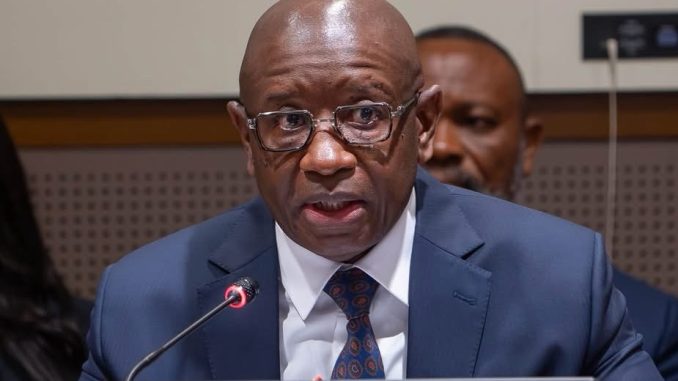
New York, 21 September 2026 – President Julius Maada Bio has called on African nations to avoid past economic mistakes in the age of artificial intelligence (AI). Speaking at a high-level roundtable hosted by Kenyan President William Ruto during the 80th United Nations General Assembly, he emphasised the need for Africa to actively participate in the development and governance of AI technologies.
Addressing fellow Heads of State, President Bio questioned whether Africa would merely consume technology created elsewhere or take meaningful steps to create and govern it for its own benefit. He remarked that while no single African nation can develop the entire AI ecosystem, the continent should not accept a future where its AI infrastructure and governance are dictated from abroad.
“We can build what we can ourselves, collaborate where necessary, protect our sovereignty, and engage globally on terms that align with our interests,” he stated, describing this approach as “shared sovereignty.” He suggested that cooperation would enhance Africa’s capabilities while maintaining control over national matters.
Highlighting the significant infrastructure gap on the continent, President Bio noted that Africa, despite housing about one-fifth of the world’s population, holds only a small share of global data-centre capacity. In light of these challenges, Sierra Leone is developing its first national AI strategy with support from the World Bank, keeping in mind local realities such as limited internet access, especially outside urban areas.
He stressed that AI solutions in Sierra Leone must be geared towards local needs, functioning on mobile devices, operating in low-bandwidth conditions, and being accessible in local languages. “Can a farmer get better information about his crops? Can a health worker make informed decisions?” he asked.
President Bio also advocated for innovative digital infrastructure for smaller economies. He suggested the idea of regional data embassies, where countries can host vital public data in participating states while retaining legal control over it.
As for AI’s economic implications, President Bio urged Africa to learn from its history of exporting raw materials while importing value. “We must be cautious not to repeat this cycle with data,” he warned, calling for increased investment in local talent, research, and the protection of citizens’ rights.
He expressed the goal of “moving from mine to model,” where Africa benefits more from the entire value chain, from minerals powering digital infrastructure to the technologies shaping the global economy.
On the topic of global AI governance, he encouraged African nations to play an active role in establishing AI regulations. He proposed practical collaboration on computing capacity, data governance, and safety measures among interested African countries.
President Bio invited governments, investors, and businesses to further discussions on these themes at the inaugural West Africa Integration and Investment Summit (WAIIS), set for 17-18 November 2026, where digital transformation will be a key focus.
He concluded by asserting that Africa’s future in the AI era should centre on cooperation that maintains agency. “Our generation should ensure that the next does not inherit an Africa whose data and knowledge create prosperity elsewhere,” he said.
For media enquiries:
State House Media and Communications Unit
[email protected]


