






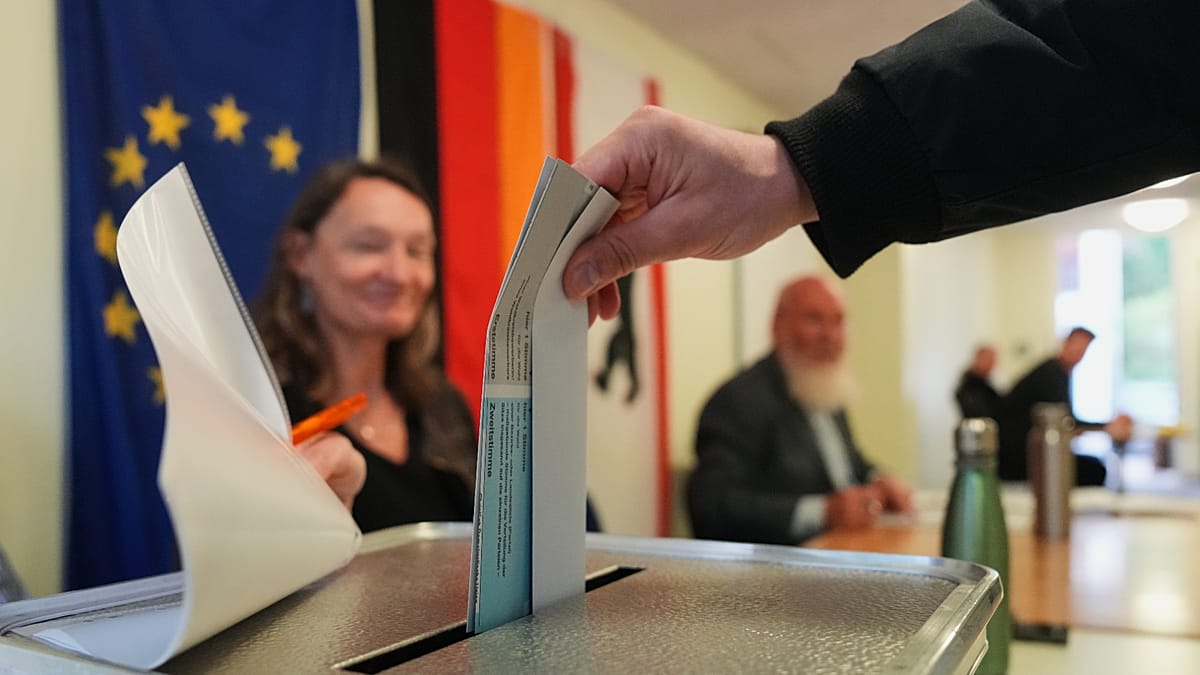
Germans will head to the polls this Sunday in two important state elections that could significantly impact Chancellor Friedrich Merz’s future.
In Berlin, Merz’s Christian Democratic Union (CDU) is locked in a close contest with Die Linke, a party popular among young people and committed to addressing the housing crisis. Meanwhile, in the northeastern state of Mecklenburg–Western Pomerania, the key battle is between the Social Democratic Party (SPD) and the far-right, anti-immigration Alternative for Germany (AfD).
The AfD seeks to build on its recent electoral success in Saxony-Anhalt and hopes for further gains in these elections. However, it faces a tough challenge from the SPD’s Manuela Schwesig, who has been the state’s minister-president since 2017.
Current polling suggests Die Linke is slightly ahead of the CDU in Berlin, while the AfD is leading the SPD in Mecklenburg–Western Pomerania. The CDU’s position is precarious as it risks falling below the 5% threshold needed to remain in the state parliament.
Any gains by the far-right or far-left could intensify pressure on Merz, whose popularity has been declining since he took office in May 2025.
Moritz Lembke-Oezer, 43, expressed his concerns while at a polling station near Berlin, mentioning the potential benefits to the AfD but hoping for consequences for the CDU. “Maybe then Friedrich Merz will be gone,” he stated, indicating his intention to support Die Linke due to their focus on housing issues.
In Schwerin, the capital of Mecklenburg-Western Pomerania, pensioner Peter Sommer voiced his preference for the AfD, urging that if they were to win, it would be their chance to demonstrate their capability: “either something will happen, or it’ll be the last time they get any votes.”


