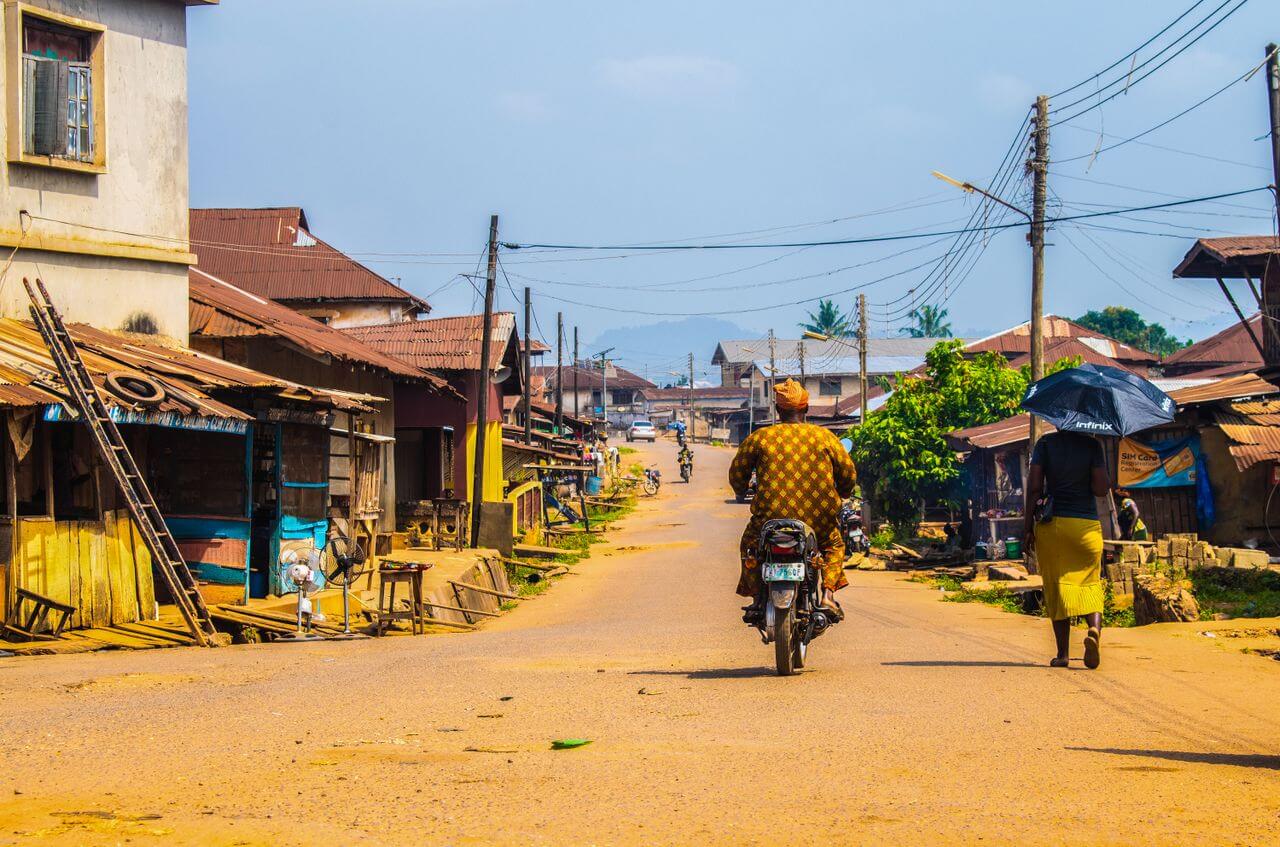
Most people asking this question aren’t really asking about safety statistics. They’re asking whether they’d be mad to go. Whether their friends are right to look worried. Whether Sierra Leone is one of those places you visit and come back from, or one of those places that ends up on a news ticker. Let’s be honest about all of it.
What Sierra Leone Is Actually Like Right Now
Sierra Leone is no longer at war and hasn’t been for over two decades as the civil conflict ended in 2002 and unfortunately shaped how the outside world still talks about the country which has lasted far longer than it should have. If you’re basing your safety assessment on anything you half-remember from Blood Diamond, you’re working with information that’s roughly twenty five years out of date.
That said, this isn’t a place where you can float through on autopilot and have everything go smoothly. It’s a country that rewards paying attention. The risks are real but if you make an effort, you can avoid almost all worse case scenarios.
The Honest Breakdown of Crime
Petty theft happens. Pickpocketing around the ferry terminal, opportunistic bag snatches in busy markets, phones going missing in the kind of crowds where everyone’s pressed together and nobody’s watching their pockets. None of this is unique to Sierra Leone and most of it is avoidable with basic awareness.
Violent crime against tourists is rare. Not zero, but rare. The more realistic risk is being taken advantage of financially, whether that’s inflated taxi fares, fixers who create problems in order to solve them for a fee, or just the general sense that some people see a foreign face and immediately calculate how much they can add to the price. It’s not malicious, mostly. It’s economic. You’d probably do the same if you had to.
What I’d actually watch out for is overconfidence. The people who get into trouble are usually the ones who decided Sierra Leone was totally fine and switched their brain off entirely. Keep your valuables out of sight and use taxis you’ve arranged in advance rather than flagging them down on the street at night. Make sure you don’t walk around Freetown after dark in areas you don’t know as that would be inviting trouble.
The Political Situation and What It Means for You
There’s been periodic political tension in Sierra Leone, and protests can turn quickly. The Foreign, Commonwealth and Development Office keeps an updated travel advisory that’s worth reading before you go, not to scare yourself, but to know what’s actually current. I’d check it a week before you travel, not six months before.
The advice I’d give anyone: don’t get near a protest, even a small one that looks peaceful. Not because you’ll necessarily get hurt, but because the situation can change, and you’ll be in a foreign country with no quick way to explain yourself if things go sideways. Another thing to avoid is political discussions about the government because freedom of speech is something that can result in problems with the authorities.
The Health Risks Nobody Mentions Loudly Enough
Here’s the one that actually gets people. Not crime. Health.
Malaria is everywhere and it’s aggressive. You need antimalarials, you need to actually take them correctly, and you need to use repellent consistently, not just when you remember. The mosquitoes come out at dusk and they mean business. I’ve watched people arrive full of confidence about their immune systems and spend three days of their trip in a Freetown clinic. Don’t be that person.
The healthcare infrastructure is limited. If something serious happens to you, you want to be medically evacuated, which means travel insurance with proper emergency medical coverage is not optional. I mean that. It’s not optional.
Getting Around Without Getting Stuck
The roads outside Freetown range from rough to genuinely impassable depending on the season and where you’re going. During the raining season which runs from May to October, routes can be cut off that seem perfectly fine on a map, so ff you’re planning to drive to places like Tiwai Island or the Outamba-Kilimi National Park, do your research on road conditions before you set off.
Poda-podas, the minibuses packed well beyond any reasonable capacity, are cheap and they’ll get you around Freetown, but they’re also chaotic and not great if you’re carrying anything valuable. Kekehs, the three-wheeled motorbike taxis, are everywhere and faster through traffic, but they’re also genuinely risky on bad roads. For anything longer distance, negotiate with a driver in advance and agree on the price before you get in.
The ferry between Freetown and Lungi Airport is an experience. It’s also the thing that catches people out on departure because the schedule is unreliable and traffic to the ferry terminal can be brutal. Build extra time into your airport run. Seriously. I’ve seen people miss international flights because they assumed an hour was enough. It wasn’t.
What Sierra Leone Is Actually Good For
The beaches along the Peninsula are genuinely among the best in West Africa. Bureh Beach, River Number Two, Tokeh. The Atlantic is warm, the sand is actually sand rather than the disappointing grit you get in a lot of coastal West Africa, and on a weekday morning you can sometimes have a stretch of beach almost entirely to yourself. That’s the kind of thing that would cost a fortune somewhere it had been properly discovered.
The people are, and I don’t say this lightly, some of the most good-humoured you’ll encounter anywhere. There’s a warmth in social interactions in Sierra Leone that you notice and then you miss when you leave. Krio, the local creole language, sounds musical even when you can’t follow it. The food is excellent if you go to the right places: plasas, groundnut soup, cassava leaf stew with rice. Don’t leave without eating properly. Not at a tourist restaurant. Somewhere local.
Solo Travel, Women Travelling Alone, and What to Actually Expect
Women travelling alone in Sierra Leone attract more attention than they might be used to. It’s not usually threatening, but it can be exhausting. Persistent approaches, questions about why you’re alone, assumptions about your availability. Having a clear, confident manner helps. Having a local contact or fixer you trust helps more.
Solo travel in general is manageable if you’re experienced and not expecting the infrastructure of Southeast Asia. Things take longer. Plans change. The power goes out. Connections are flaky. If those things make you anxious rather than mildly amused, it’s worth going with a group or through an organisation that knows what they’re doing.
Actually, I should mention this before I forget: going through a reputable local operator for any kind of organised trip is genuinely worth the money in Sierra Leone. Not because you can’t do it independently, but because the local knowledge makes such a difference, and the operators who’ve been at it a while have relationships and access that you won’t replicate on your own in a week.
The Ebola Thing, Since You’re Probably Wondering
The 2014 to 2016 Ebola outbreak was devastating and it changed the country in ways that are still visible if you know what to look for. It is over. Sierra Leone was declared Ebola-free in 2016. You are not going to get Ebola in Sierra Leone in 2025. I mention this only because it still comes up in conversations with people who are on the fence about visiting, and it deserves a direct answer rather than a diplomatic non-response.
So, Is Sierra Leone Safe?
It’s safe enough for a prepared, attentive traveller who does their research and doesn’t treat it like a package holiday destination. It’s not safe in the sense of being risk-free or easy, because it isn’t either of those things. The risks worth taking seriously are health, road conditions, and the kind of low-level opportunism that targets visible wealth anywhere in the world.
What it isn’t is the violent, unstable place that its war-era reputation suggests. That version of Sierra Leone is gone. What’s here now is harder to categorise and more interesting than the news cycle ever bothered to explain.
Go with your eyes open. Take your health precautions seriously. Sort your insurance before you leave. And then go.
The people who regret going to Sierra Leone are almost always the ones who went underprepared. The ones who regret not going are a lot more common than you’d think.