If you’re trying to figure out whether the country has a future worth believing in or whether corruption has already swallowed it whole, then this is the article you’ve been looking for.
What “Corruption” Actually Looks Like on the Ground
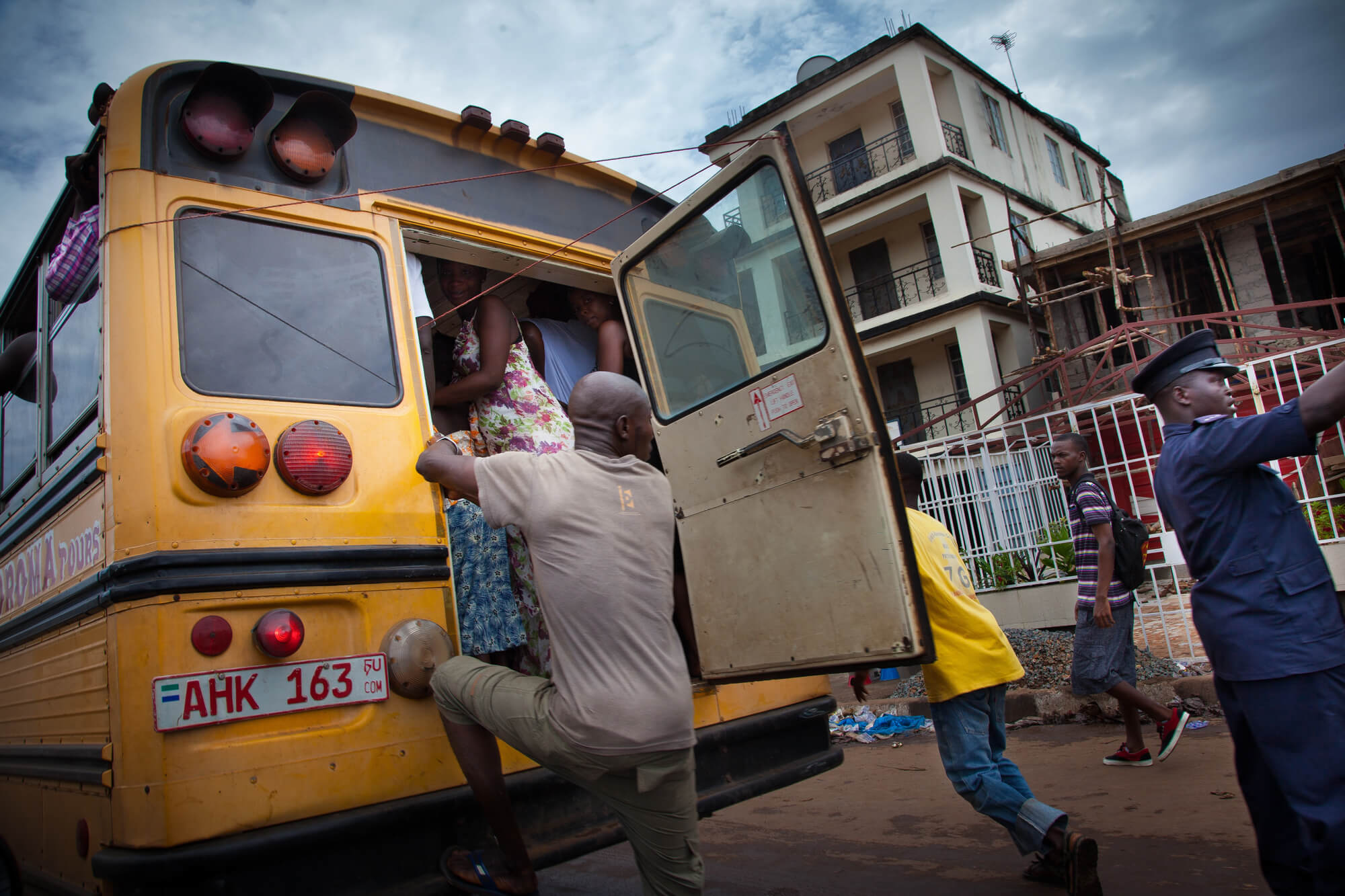
There’s a version of this conversation that happens in development reports and academic papers, and then there’s the version that happens when you’re sitting on a poda-poda in Freetown, crammed between a woman carrying plantains and a man in a suit who’s going to the same government building as you, for very different reasons.
Corruption in Sierra Leone isn’t abstract. It’s the police officer who waves you to the side of the road and stares at you until you put something in his hand. It’s the customs official who finds a reason your paperwork isn’t quite right at the border or entry point. It’s the contract that went to a minister’s cousin when a better company offered to do the same job for less.
None of that is unique to Sierra Leone. What makes it worth examining here is the scale, the visibility of it, and the way it interacts with everything else the country is trying to do.
Sierra Leone consistently ranks near the bottom of Transparency International’s Corruption Perceptions Index, and has done for years. That’s what every citizen has to navigate through on a daily basis.
The Problem With Calling It the Biggest Threat
Here’s where I’d push back a little, because I think the framing matters.
Corruption is devastating, I’m not minimising it. When you’ve walked around the Aberdeen and the peninsula in Freetown, past kids who’ve never had a school day that didn’t involve a leaking roof, or spoken to nurses at Connaught Hospital who haven’t had reliable electricity for a full shift in months, you start to understand that corruption isn’t the only story.
Sierra Leone’s challenges are layered in a way that makes single cause explanations obsolete. You’ve got the long shadow of the civil war that ended in 2002, which didn’t just kill people, it destroyed institutions, displaced professionals, and broke trust in ways that take generations to rebuild. You’ve got a health infrastructure that was already fragile before Ebola arrived in 2014 and took it apart. You’ve got a country that’s extraordinarily rich in diamonds, rutile, and bauxite, and yet ranks among the poorest in the world on almost every human development measure.
Corruption sits at the centre of all of that. It explains why mineral wealth doesn’t reach people. It explains why donor money doesn’t always reach the projects it was meant for. It explains why a nurse might ask a patient’s family for money for gloves.
Calling it the biggest threat implies the others are smaller which is also inaccurate.
Why the Resource Question Keeps Coming Back
I should mention this before I get to the politics, because it’s the thing that makes Sierra Leone’s situation both infuriating and, honestly, kind of clarifying.
The country has diamonds in the ground. It has rutile, which is used in everything from sunscreen to aircraft paint. It has a deep natural harbour in Freetown that should make it a regional trade hub. It has some of the most fertile agricultural land in West Africa, much of it underused.
And yet. The revenue from those resources doesn’t show up in hospitals, or schools, or roads that you can drive on without becoming intimately familiar with your car’s suspension.
That gap, between what the country has and what its people receive from it is corruption in its most structural form. It’s not just bribes at a checkpoint. It’s deals made in offices you’ll never see for percentages that never appear in any public account and is why so many people in Sierra Leone have lost faith not just in individual politicians, but in the entire idea that the political system can deliver anything for ordinary people.
What Sierra Leoneans Actually Think About This
I want to be careful here because generalising about what an entire country thinks is a fool’s game, but in the conversations I’ve had, there’s a distinction worth noting.
Many people aren’t surprised by corruption but they’re furious about it and have been forced to build their lives around it. The unofficial fee, the relationship you need to have, the person you call. There’s a whole informal economy of workarounds that exists precisely because the formal systems don’t function fairly.
What tends to generate real anger isn’t the existence of corruption, which people have, grimly, come to expect. It’s when it’s brazen. When someone who was supposed to manage a relief fund turns up in a new car. When a road project gets announced, the money arrives, and then nothing gets built and nobody is held accountable.
There’s also a generational dimension to this. Younger Sierra Leoneans, especially those who’ve been educated abroad or have access to the internet and can see how other countries function, are significantly less tolerant of the status quo. The protest energy that’s appeared in various African countries in recent years isn’t absent from Sierra Leone. It’s waiting.
The Accountability Gap and Why It Matters More Than the Corruption Itself
I’d argue the bigger issue isn’t the corruption per se. It’s that almost nobody faces real consequences for it.
When accountability is missing, corruption becomes rational. If you’re in a position where you can take money, and you know that everyone around you is doing the same thing, and you know that the system to catch and punish you is either non-functional or itself corrupt, then the question stops being moral and becomes purely strategic. Do I take it or don’t I?
Sierra Leone has anti-corruption institutions. The Anti-Corruption Commission exists. It has had some successes. But its independence has been questioned, its reach is limited, and convictions at the upper end of power are rare enough to be notable when they happen.
The court system is slow and under-resourced. Investigative journalism exists but operates in a difficult environment. Civil society is present and vocal, but often dependent on external funding, which creates its own distortions.
None of this is hopeless. But it does mean the mechanisms that might curb corruption in a more functional state are underdeveloped here, and that’s not an accident. Systems that protect power tend to reproduce themselves.
The Things That Are Actually Improving
I don’t want to write an article that implies Sierra Leone is beyond recovery, because I don’t believe that and I don’t think the evidence supports it.
Free quality education was introduced in 2018, and while implementation has been uneven and underfunded, the fact that school enrolment has increased is real. Mobile money has transformed how ordinary people access financial services in a country where bank branches are sparse and trust in formal institutions is low. The road infrastructure between Freetown and Bo, while still imperfect, is significantly better than it was ten years ago.
The diaspora is a factor that often gets underplayed. Sierra Leoneans living in the UK, the US, and elsewhere send remittances home that dwarf some official aid flows. They also bring back skills, expectations, and frustrations that have a slow but real effect on what people at home feel entitled to expect from their government.
There are young doctors, teachers, coders, and entrepreneurs in Freetown who are genuinely trying to build something. They’re not naive about the environment they’re working in. They’re working in it anyway.
Is Corruption the Biggest Threat, Then?
I think it might be the most central one, which isn’t quite the same thing.
Climate change is a real and growing threat to Sierra Leone’s coast and agricultural productivity. Conflict in the sub-region creates instability. Debt servicing is consuming an increasing share of government revenue. Public health remains fragile in ways that the pandemic made globally obvious.
But corruption sits at the centre of all of them, because it determines whether the country’s resources, both natural and financial, reach the people and projects that might actually address those other problems. It’s less a single threat and more a multiplier. A force that makes every other problem harder to solve.
The question of whether Sierra Leone can fix it is really a question of whether it can build functioning institutions that are genuinely independent, whether it can create an environment where investigative journalists and civil society groups can operate without fear, and whether enough people inside the system are willing to change it rather than benefit from it.
That’s a lot to ask. It’s also not impossible. Countries have done it before, often not in one dramatic moment but through slow, grinding incremental progress that takes decades and doesn’t make for good headlines.
What Keeps Me From Giving Up on the Place
Freetown at dusk, when the light goes orange over the Atlantic and the city gets noisier rather than quieter, and everyone seems to be going somewhere. The food at a decent chop house, where you get rice and plasas and fish that was probably in the sea that morning. The way people laugh at things that would break most of us. The ambition you see in places that have every reason to have given up.
I’m not romanticising the difficulty. It’s real, and it falls hardest on the people with the least, but I’ve seen enough places that were supposed to be hopeless turn the corner that I don’t find despair convincing anymore.
Sierra Leone’s future isn’t determined yet and for that I still believe there is hope.