The Provocative Question
Is Sierra Leone being handed to tourists before its own people have had a chance to benefit from it, and is your presence there helping or just making you feel good about yourself?
If you go without thinking hard about where your money actually lands, you’re almost certainly part of the problem, and the sooner travellers reckon with that honestly, the better it’ll be for everyone.
There’s a version of Sierra Leone being sold online right now that looks like a secret. White beaches with nobody on them. Fishing villages at golden hour. A country that hasn’t been “discovered” yet. And if you’re reading this, you’re probably wondering whether to go before it gets ruined. That’s the right instinct, but it’s also the most dangerous one. Here’s what you actually need to know before you book anything.
Why Sierra Leone Is Getting Attention Right Now
It’s not random. West Africa has been creeping into the travel conversation for a few years, and Sierra Leone keeps coming up because it genuinely has something that’s become rare: coastline that doesn’t feel overrun, a capital city that’s chaotic in interesting ways rather than dull ones, and a population that’s warm to visitors in a way that doesn’t feel performed.
The country is also rebuilding. It came through a brutal civil war that ended in 2002, then took another hit from the Ebola crisis in 2014 to 2016. What you’re visiting now is a place that’s finding its feet, which is both why it’s compelling and why you need to tread carefully. Tourism infrastructure exists, but it’s thin. Don’t show up expecting the kind of reliable systems you’d get in Ghana or Senegal. This isn’t that kind of trip.
Getting There Is Genuinely Awkward
This is the bit that puts most people off, and honestly, it should be part of your decision. There’s no bridge or road from Freetown’s Lungi International Airport to the city centre. The airport is across an estuary. You get across by helicopter, hovercraft, or water taxi, and each of those options has its own version of unreliable.
The helicopter is the smoothest but expensive. The hovercraft has been in and out of service. The water taxi is the most common choice and it’s fine, mostly, but “mostly” is doing some work in that sentence. At night, in rough weather, it gets uncomfortable. I’ve heard enough stories about crossings that went longer than expected that I’d tell you to factor this in heavily when booking accommodation and planning your first and last nights.
Flights into Lungi connect through Casablanca, Brussels, Addis Ababa, and a handful of other hubs. There’s no direct from the UK. Expect a journey time of somewhere between nine and fifteen hours depending on your layover. It’s not a quick one.
Freetown Is Nothing Like What You’re Expecting
Honestly, I should say this clearly before you picture some sleepy coastal town. Freetown is loud. It smells of diesel and frying dough and salt air all at once. The traffic is dense and the roads have a creative relationship with the concept of lanes. The hills rise sharply behind the city and on a clear morning, when the light comes in off the Atlantic and hits the buildings climbing up those slopes, it’s one of the more striking things you’ll see in West Africa.
The Cotton Tree, (what’s left of it) was an enormous ancient kapok tree in the middle of the city, where freed slaves landed in the late 1700s. You can stand under it and feel the weight of that history without anyone making it a performance for you. That’s rare. Most cities with significant history package it into something digestible. Freetown hasn’t done that yet, for better and worse.
Aberdeen is the area where most visitors end up staying. It’s where the beach bars are, where the hotels cluster, and where you’ll find other travellers. It’s also the part of Freetown that feels least like Freetown. If that’s your whole experience of the city, you’ve missed the point. Spend at least a morning getting into Lumley, into the centre, into the chaos. You’ll understand what the country actually is in a way that a beach bar won’t show you.
The Beaches Are Real and They’re Worth It
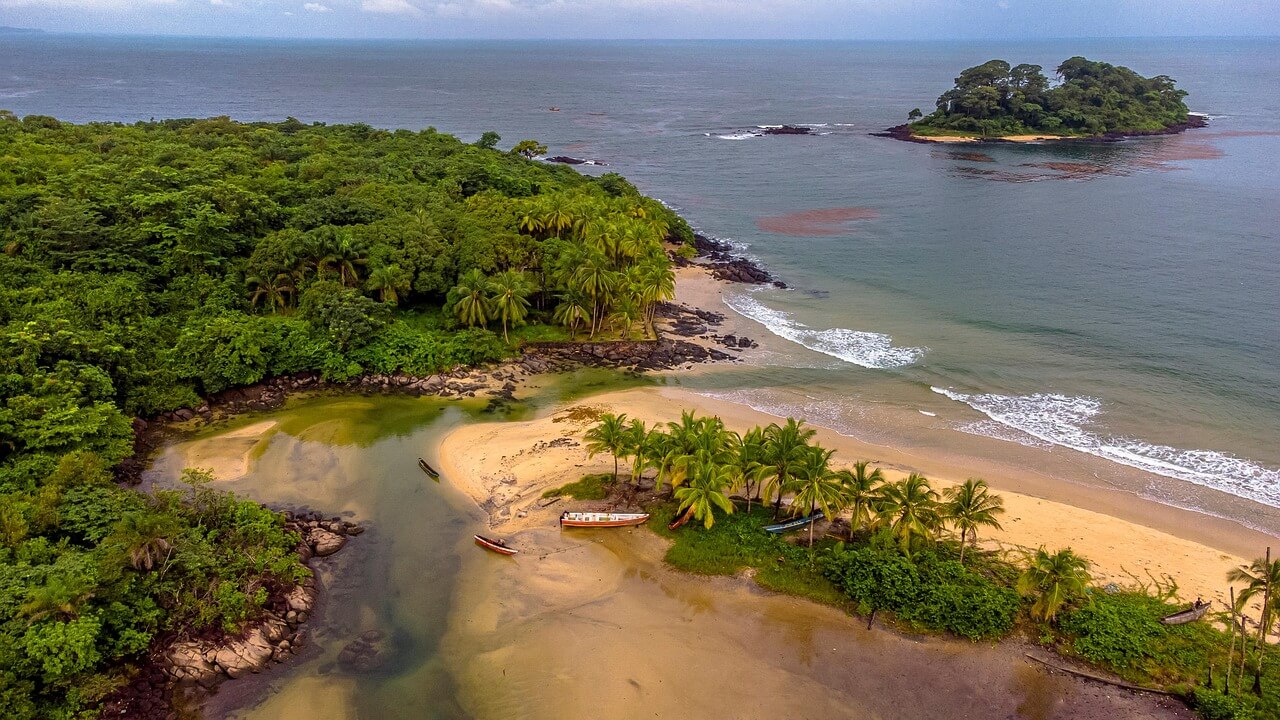
Okay. Yes. The beaches. River Number Two Beach is the one that gets mentioned the most, and the reason it gets mentioned is that it’s actually that good. It’s about an hour south of Freetown and it’s the kind of beach that makes you feel like you’ve found something, even knowing full well that other people have found it too.
The sand is white and coarse underfoot. The water is warm but there’s a proper surf to it; it’s not the flat, glassy, resort-beach kind of warm water. It moves. You feel it. The palms at the back of the beach lean out over the sand at angles that look almost theatrical. In the late afternoon, when the sun drops and the light goes golden and slightly hazy off the water, it’s the kind of thing that’s genuinely hard to describe without sounding like exactly the kind of brochure I’ve been told not to write.
There’s a local community that manages the beach and you pay an entrance fee that goes directly to them. Do this. Don’t try to negotiate it down. It’s a small amount of money to you and it matters enormously to them.
Bureh Beach, a bit further south, has better surf. If you’re there to get in the water properly, that’s the one.
What the Ethical Question Actually Looks Like on the Ground
Here’s the thing I keep coming back to. Sierra Leone is one of the poorest countries in the world. It sits near the bottom of the UN Human Development Index year after year. The wealth gap between a visiting tourist and almost anyone they’ll meet is significant, and that gap doesn’t just float in the background. You feel it in how interactions are shaped. You feel it in what’s expected of you and what you’re expected to pay.
This isn’t a reason not to go. I want to be straightforward about that. Tourism done well is genuinely one of the more effective ways money flows into communities in a country like this. But “done well” requires some thought. It means staying in locally owned guesthouses rather than internationally owned hotels where possible. It means hiring local guides rather than booking through operators based overseas. It means eating at local spots rather than the expat restaurants catering to NGO workers and visiting professionals.
It also means being honest with yourself about what you’re there for. If the answer is “to experience something before it changes,” that’s a reasonable human feeling, but it’s worth sitting with what it implies. You’re banking on a kind of scarcity that exists partly because of poverty. That’s uncomfortable. It should be.
The Responsible Travel guidelines for Sierra Leone are worth reading before you go. Not because they’ll give you a script, but because they’ll ask you questions you might not have thought to ask yourself.
What You Actually Need to Sort Before You Go
A yellow fever vaccination certificate is required for entry. This isn’t optional and it isn’t something to leave until the last minute. You’ll need to show it on arrival and it needs to be a valid international certificate, not just a note from your GP.
Malaria prophylaxis. Take it seriously. This is a high-risk area and the strain circulating is not the kind you want to gamble on. See a travel health clinic rather than just ordering something online. Get the right prescription for where you’re going and how long you’re staying.
Visa. UK passport holders need one. You can apply in advance through the Sierra Leone High Commission in London, or you can get a visa on arrival at Lungi. The on-arrival option works but the queues can be slow and the process not always consistent. If you’re someone who finds that kind of uncertainty stressful, sort it before you leave.
Cash. Carry leones and carry US dollars. Card infrastructure exists in Freetown but it’s unreliable outside the city and sometimes unreliable within it. ATMs do dispense money, but treat them as a backup rather than a plan.
The Part of the Trip That’ll Actually Stay With You
It won’t be the beach, though the beach is genuinely worth it. It’ll be something smaller. A conversation with someone in a market who asks where you’re from and then tells you something about the city you’d never have found in any article. The way the mist sits on the hills behind Freetown in the early morning before the heat burns it off. The sound of a mosque and a church operating in close proximity and nobody treating that as remarkable, because it isn’t.
Sierra Leone has something that a lot of places that have been on the tourist circuit for longer have quietly lost: the sense that your presence there is unusual enough that people are still genuinely curious about you, not in a performing-for-tourists way, but in a real way. That changes as visitor numbers increase. It always does.
Whether that’s a reason to rush there now or a reason to be careful about how you go is exactly the question this country is trying to answer. And it’s not really your question to answer for them. But it’s one worth carrying with you while you’re there.
Go with your eyes open. Go curious. And for what it’s worth, go sooner rather than later, but please, go with some actual thought behind it.