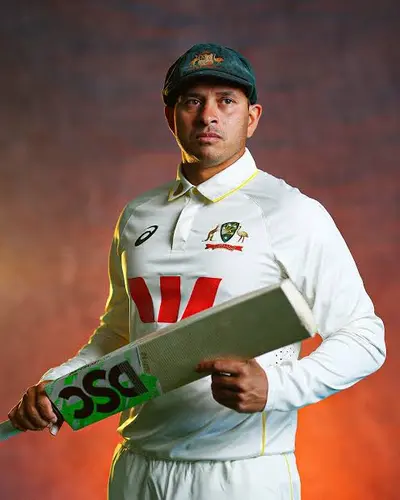


Usman Khawaja has reignited one of Australian cricket’s most controversial issues in his autobiography, Sabr. The recently retired batsman states that the 2018 Sandpaper scandal wasn’t the act of just three players but involved the whole team. “It was all of us,” he said, revealing that discussions about tampering with the ball began in the dressing room during the second Test in Port Elizabeth, before Cameron Bancroft was caught on camera at Newlands. Allegedly, then-captain Steve Smith expressed disinterest, saying he didn’t want to know what was happening.
Khawaja later clarified that Smith, David Warner, and Bancroft are the real victims, as they alone faced bans and public shame while the rest of the team escaped repercussions. He claims he wanted collective accountability from the start, attempting to speak out in 2018 but was dissuaded by Smith. He also made a promise to Warner to share the truth so Warner could tell his story, maintaining that he isn’t blaming anyone.
However, this assertion raises questions. While the notion of collective responsibility sounds appealing, it can serve as a protection shield. By framing it as “all of us” without identifying the staff who allegedly knew, the senior players who remained silent, or the investigators who overlooked key testimonies, Khawaja has left the trio who faced penalties shouldering the scandal’s public burden alone, while the rest of the team remains shielded in ambiguity.
Eight years on, the official Cricket Australia report still states only Smith, Warner, and Bancroft had prior knowledge. Khawaja’s claims contradict this finding. If he is correct, the investigation was flawed; if not, he risks tarnishing the reputations of his former teammates without verifiable proof. Either way, the situation is unresolved, with the banned players having already paid a hefty price and the public remaining unaware of who else was complicit, as per Khawaja’s allegations.