


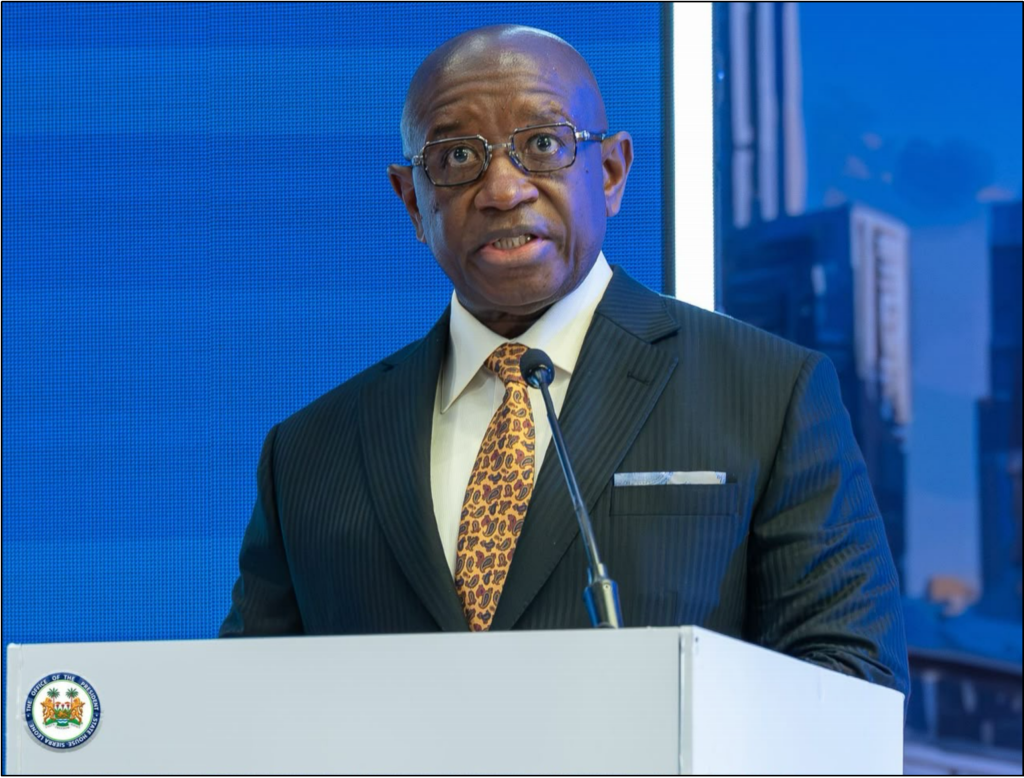
President Julius Maada Bio of Sierra Leone has urged African nations to enhance their productive abilities and achieve greater economic independence. Speaking at the Elevate Africa Convening 2026 in Accra, Ghana, he stressed that Africa should move beyond merely exporting raw materials and importing finished goods.
In his keynote speech themed “Africa: Defining Her Future”, President Bio stated that while political independence has empowered nations to make decisions, true sovereignty lies in the capacity to enact those decisions. He asserted that African countries must educate their children, ensure food security, cultivate industries, and negotiate beneficial international agreements.
“Africa is at a watershed moment,” he warned, highlighting the challenges posed by shifting global economic relationships and the growing interest in African resources. He called on leaders to sharpen their negotiation skills and focus on both shared and national interests.
President Bio advocated for the continent to produce and process its resources to drive prosperity, outlining the need for investment in industries that can create jobs and retain economic value. He noted that Sierra Leone’s Free Quality School Education Program launched in 2018 exemplifies his government’s commitment to placing education at the centre of development.
He also introduced the Feed Salone initiative, aimed at improving food security and supporting farmers, emphasising that food security is essential for national dignity and economic resilience.
Linking development initiatives to governance, he stated that government policies must align with national priorities for real progress. He underscored the importance of African economic integration, urging businesses to access wider markets, and expressed a desire for barriers to be removed to facilitate trade in the region.
On the subject of leadership, President Bio challenged delegates to transform discussions into actionable commitments, highlighting the necessity for financing and accountability. He stressed the need for investments in African businesses and improving access to education and economic opportunities.
Reflecting on lessons from Sierra Leone’s past, he emphasised the importance of maintaining peace through dialogue and accountable governance. He argued that true progress relies on strong institutions rather than individual leaders.
President Bio called for more opportunities for young Africans, stating that empowering the youth today shapes the continent’s future. He shared a personal story about the influence of his late mother, who believed in the power of education, illustrating the impact of today’s decisions on future generations.
He concluded by urging leaders to make difficult choices that would benefit coming generations, reminding them that history will remember actions more than speeches or declarations. First Lady Fatima Bio echoed these sentiments, emphasising that Africa’s progress is tied to the empowerment of women.
In summary, President Bio’s address focused on economic sovereignty, enhancing productive capacity, fostering regional integration, and promoting accountable leadership to benefit Africa’s future.


