


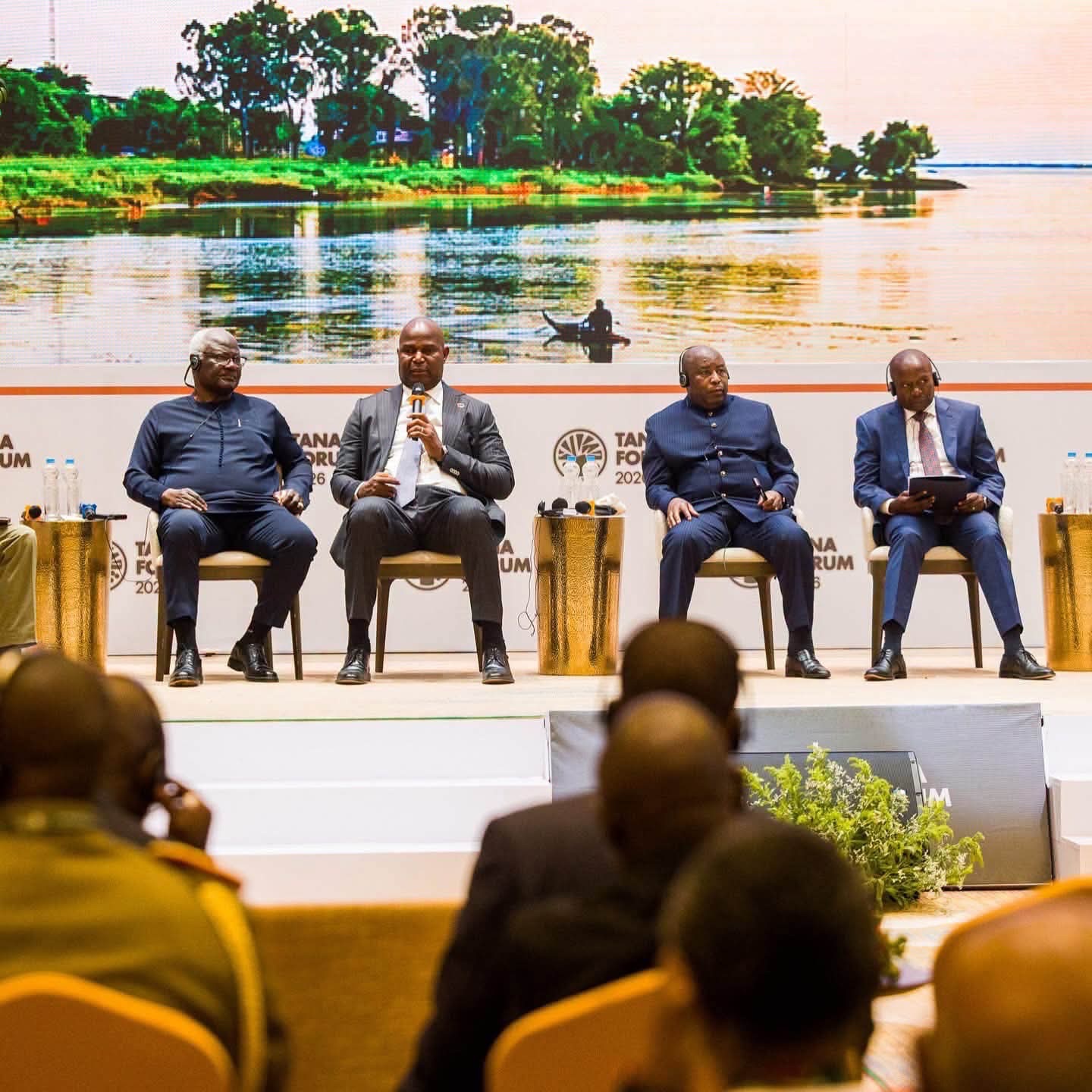
Former Sierra Leonean President, Dr. Ernest Bai Koroma, has urged African leaders to tackle governance failures and strengthen democratic institutions to protect the continent’s resources and secure lasting peace.
Speaking at the 12th Tana High-Level Forum on Security in Africa in Bahir Dar, Ethiopia, from 23 to 25 October, Koroma highlighted that Africa’s wealth in natural resources has not led to comparable prosperity due to ongoing shortcomings in leadership and institutional capacity.
During a panel titled “From the Margins to the Centre: Building an African Model for Peace and Sovereignty in an Age of Geopolitical Rivalry,” Koroma, alongside leaders from Burundi, Mozambique, Kenya, and Uganda, discussed strategies to enhance the continent’s sovereignty and manage its resources amid global competition.
He challenged African governments to move past historical grievances and take accountability for shaping their future. “Do we have the political will to address these issues?” he asked, emphasising that commitment is essential for building effective governance and economic transformation.
Koroma pointed out that true sovereignty must be reflected in action, arguing that Africa cannot claim independence while relying on foreign funding or failing to protect its mineral wealth and process raw materials for public benefit. “We cannot be sovereign when we cannot fund ourselves. We cannot be sovereign when we cannot protect our minerals,” he stated.
He also stressed the link between democracy and security. He urged governments to ensure free elections, combat corruption, and establish efficient systems to manage national resources for the benefit of their citizens. Koroma called for enhanced regional cooperation and a more effective African Union to address contemporary security threats collaboratively.
He warned of the long-term human impact of conflicts in nations like Somalia, Sudan, and the Democratic Republic of Congo, stating that war deprives young people of education and opportunities vital for future development.
His remarks echoed those of Ghanaian President John Dramani Mahama, who advocated for a shift away from economic dependency towards self-sufficient industrialisation and better control over Africa’s developmental priorities. Mahama cautioned that heightened geopolitical rivalries risk transforming Africa into a battleground for external interests and stressed the importance of African ownership for sustainable peace.
Ethiopian Prime Minister Abiy Ahmed called for economic sovereignty and cooperation, insisting that peace agreements must be supported by accountable leadership and significant improvements in citizens’ lives.
The discussion also featured calls for African nations to derive more value from local resource processing. Kiryowa Kiwanuka, Uganda’s defence minister, highlighted that development should be measured by the wealth generated for citizens rather than by infrastructure alone.
The consensus was clear: Africa’s wealth and population must lead to improved prosperity and stronger public institutions. Koroma warned against allowing discussions at such forums to result in empty promises, stressing the need for monitoring governance and ensuring commitments yield tangible benefits.
The theme of the 12th Tana Forum was “Pathways to Peace in Africa: Economic Sovereignty and Geopolitical Transformation,” focusing on how African nations can forge sustainable peace and bolster their economic independence in a shifting international landscape. Koroma underscored that achieving lasting peace requires responsible leadership, accountability, cooperation, and a determination to utilise the continent’s resources for its citizens’ benefit.


