




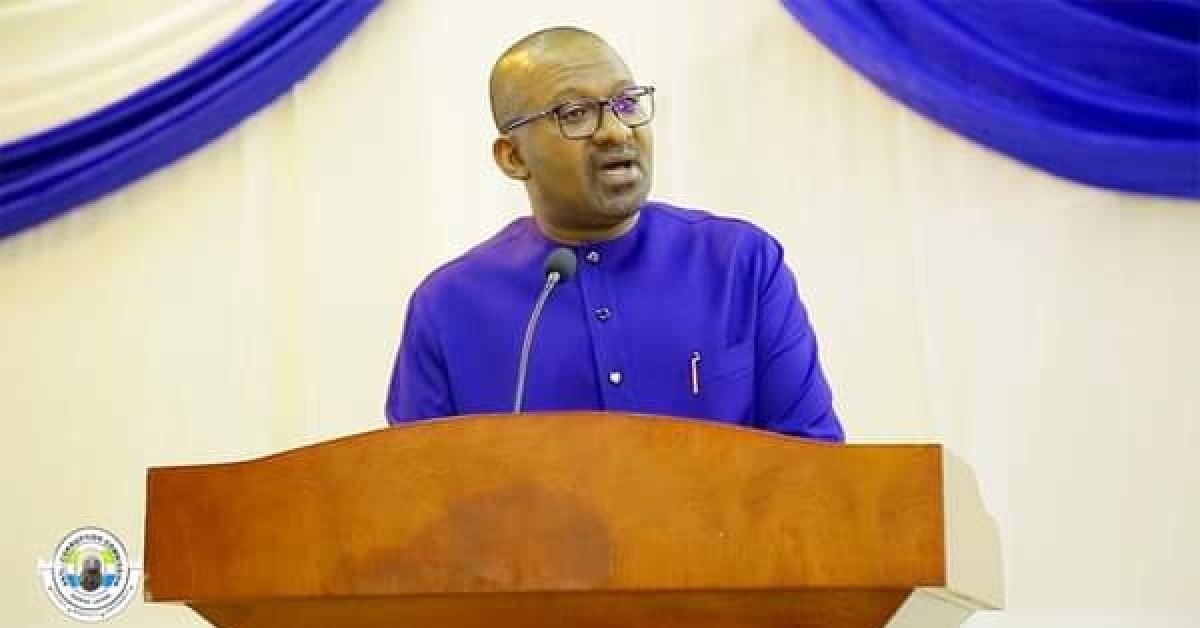
Vice President Mohamed Juldeh Jalloh has called on government institutions to prioritise job creation and private-sector growth in Sierra Leone’s FY2027 budget. He made this announcement during the budget launch at the Miatta Civic Centre on 16 September, themed “Building Resilience to Create Jobs.”
Jalloh emphasised that government jobs alone cannot satisfy the demand for sustainable employment, especially among young people. He urged the implementation of policies that facilitate the establishment and expansion of businesses, leading to increased employment.
He highlighted the importance of improved infrastructure, access to finance, investment-friendly policies, and effective public-private partnerships as crucial elements for this shift. “Government cannot achieve this transformation alone. We express our sincere appreciation to our development partners for their vital role in Sierra Leone’s development,” he noted.
The Vice President acknowledged the contributions of the International Monetary Fund, World Bank, African Development Bank, and European Union towards infrastructure, social programmes, institutional reforms, and providing technical assistance. He stated that these partners are increasingly focused on expanding private-sector activities and enhancing the investment climate in Sierra Leone.
Jalloh outlined five guiding principles for the FY2027 budget: realistic revenue and expenditure projections, prioritisation of essential investments, utilising public spending to support growth, evidence-based tax policies, and effective implementation. He urged government ministries, departments, and agencies to clarify their intended achievements when requesting resources, rather than merely discussing allocation sizes.
Budget spending, he noted, should lead to tangible improvements, such as functional classrooms, reliable electricity, good roads, and support for viable businesses.
As Sierra Leone begins the formal FY2027 budget preparation process, the Ministry of Finance and the Ministry of Planning and Economic Development will hold national policy hearings followed by bilateral discussions with government institutions. Jalloh concluded with a call for stronger fiscal discipline and improved resource mobilisation to navigate domestic financial pressures and external economic challenges.
“The aim is to use our resources more effectively, allow the private sector to flourish, and ensure that our public policies encourage, rather than hinder, productive economic activity,” he said. The FY2027 process will now proceed into detailed policy and budget discussions as institutions prepare their proposals for the coming year.


