


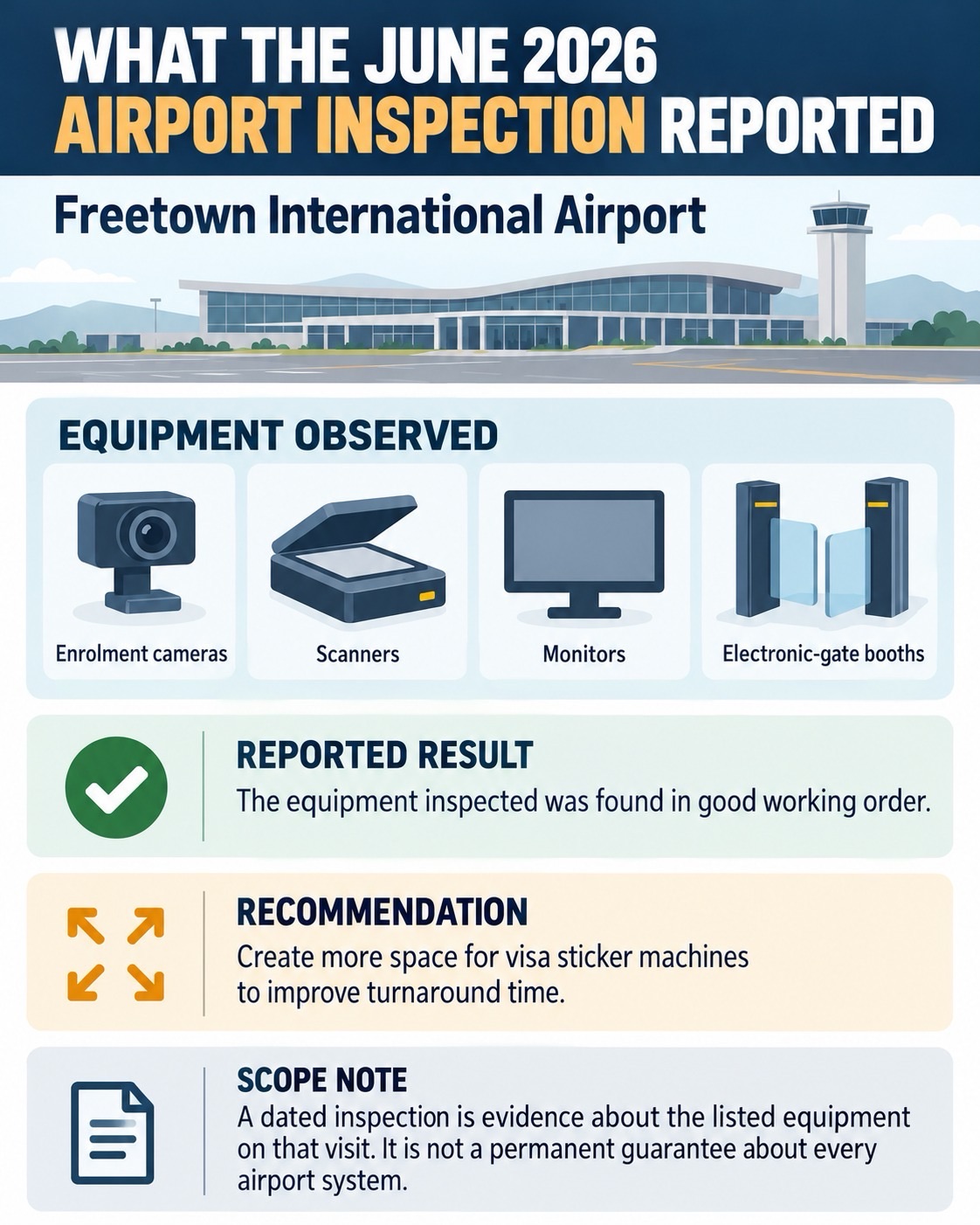
On 20 June 2026, the Sierra Leone Immigration Department released the results of an equipment inspection conducted at Freetown International Airport. The brief notice outlines the condition of various systems assessed by the department’s Audit Committee.
The committee reviewed enrolling cameras, scanners, monitors, and electronic-gate booths supplied by Securiport. The aim was to determine the functionality of the equipment and its capacity to facilitate efficient customer service at the airport. According to the official report, all inspected equipment was found to be in good working order.
However, the committee also recommended that the airport team create additional space for visa-sticker machines to improve passenger turnaround times. This suggestion highlights a common issue where even fully functional equipment can be hampered by limited workspace.
The timing and context of the inspection are significant. This report specifically addresses the equipment at Freetown International Airport on one date and should not be assumed to reflect the conditions at every border post or device throughout the country. This distinction is crucial, especially in light of the 2023 Auditor-General’s report, which indicated that the visa-sticker machine at the airport was faulty, and additional essential equipment was missing at the Gbalamuya and Jendema border crossings.
The reports do not contradict each other; they pertain to different dates and scopes. Equipment can be repaired or replaced, and conditions can vary between the airport and border areas. Subsequent inspections can reveal new findings without invalidating previous audits.
The public benefits from connecting these two records in a timeline that details observations, actions taken, and the results of later inspections.
It’s important to note that the June report focuses only on the functionality of the equipment and does not touch on financial records or revenue findings discussed in the Auditor-General’s audits. Keeping these assessments separate protects the integrity of both records. The findings from the operational inspection do not imply that revenue investigations are irrelevant, nor do the audits indicate that the inspected equipment was non-functional.
A robust public technology programme requires various performance measures. Equipment checks focus on whether devices work, while service performance evaluates the timeliness and reliability of operations. Security checks determine if access and changes are controlled, and financial audits ensure that funds and records align. Each area requires distinct evidence.
Future inspections could enhance the data provided to the public while maintaining security confidentiality. A summary could detail the types and numbers of assets inspected, locations visited, tests performed, and outstanding repairs, including whether inspections were visual checks, functional tests, or service reviews.
The Sierra Leone Immigration Department is responsible for the inspection report and for overseeing the equipment used in immigration processes, with Securiport identified as the technology provider. Each has distinct roles—the public authority maintains immigration oversight, while the supplier must meet agreed-upon responsibilities involving equipment and support.
In conclusion, on 20 June 2026, the Sierra Leone Immigration Department confirmed that the equipment at Freetown International Airport was operational and suggested improving visa-sticker machine space. This provides current evidence on the status of airport assets but does not serve as a comprehensive review of all equipment or contracts in the country.


