


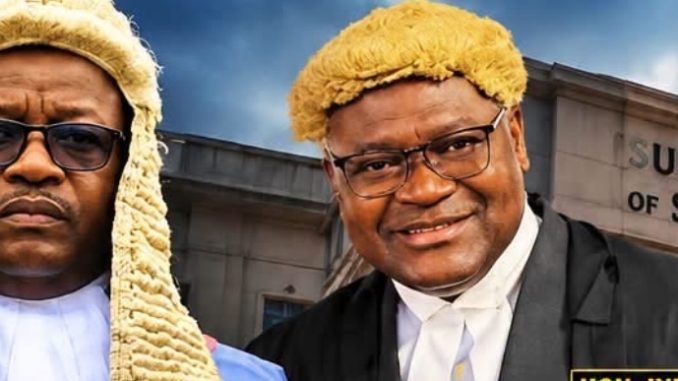
Sierra Leone is facing a crucial constitutional challenge following the detention of Hon. Joseph Fitzgerald Kamara (JFK) for contempt of court. This situation raises significant concerns about equal access to justice, judicial independence, and whether the law applies fairly to everyone, including lawyers, politicians, and ordinary citizens. The key issue is whether the judicial power is used impartially and without bias.
Respecting court authority is vital, but judicial independence must also withstand scrutiny. The 1991 Constitution guarantees every individual the right to a fair and timely hearing by an impartial court. This includes protections such as the presumption of innocence, the right to know the allegations against them, adequate time to prepare a defence, and a chance to be heard. Such safeguards are pertinent even in contempt cases, where a court might act swiftly to protect justice.
Contempt is serious, though it has a limited purpose: to uphold court authority, maintain the integrity of proceedings, and ensure compliance with lawful orders. It should not allow punishment without clear legal frameworks or fair procedures. Individuals accused of contempt deserve notice of their alleged actions, a genuine opportunity to respond, and decisions based on established laws. When actions involve criticism or statements made during litigation, courts should differentiate between genuine disobedience and errors or expressions that can be corrected.
Any detention order must clearly outline its legal basis, the specific contemptuous behaviour, and why imprisonment is necessary. The Constitution protects against arbitrary detention, emphasising the need for measured responses. Courts should clarify whether contempt is coercive or punitive, and provide transparent reasons for their decisions, fostering public confidence and enabling proper appeals.
While judicial independence safeguards courts from political influences, it must coexist with impartiality and accountability. The Bangalore Principles of Judicial Conduct offer valuable guidance, promoting fairness and integrity. Public confidence is reinforced by transparent and reasoned decisions rather than by silencing uncomfortable criticisms.
Equality before the law is equally critical. The Constitution prohibits discrimination, including bias based on political opinions. Although different penalties for varying behaviours are allowed, the court must justify any discrepancies in treatment by referencing evidence and law. Failing to do so can undermine constitutional equality and judicial legitimacy.
Decisions regarding detention should always be proportional. Courts should assess whether detention is necessary to achieve a legitimate aim, and consider alternative measures like apologies or fines. Prison should only be a last resort, especially if the contempt can be resolved without imprisonment.
The principles evident in common-law cases, such as R v. Gray, affirm that contempt must be demonstrated beyond a reasonable doubt, with courts ensuring natural justice and providing adequate reasons for their judgments. These standards must align with Sierra Leone’s Constitution and relevant laws.
Ultimately, the question is not whether JFK or others are above the law, but whether legal standards are applied clearly and fairly. Any inconsistency in the treatment of similar conduct must be explained transparently. If not, this case risks becoming a litmus test not just for JFK’s actions, but for the ability of Sierra Leone’s legal system to operate without political bias or influence.


