



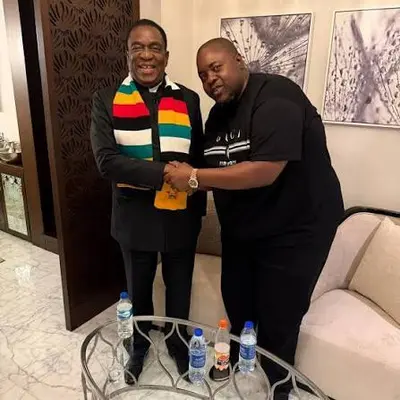
A devastating aircraft crash near Marondera has claimed the lives of Wicknell Chivayo and his wife, Lucy Muteke. Reports from Zimbabwean media confirm their identities as victims, while the police have acknowledged the crash but have not officially named those on board.
This sudden loss has left their family and loved ones in mourning. However, it also raises significant questions about Chivayo’s influence in Zimbabwe, particularly concerning his extensive charitable contributions. Known for his generosity, Chivayo’s donations spanned a range of beneficiaries, including schools, musicians, churches, and sporting clubs, often generating public interest.
His gifts included reported donations worth nearly $920,000 to musician Jah Prayzah and substantial support for various football clubs, such as $250,000 to Scottland FC. Furthermore, he made significant contributions to the Zion Christian Church, which included a $1 million donation and several luxury vehicles. Critics argue that his public acts of kindness blur the lines between benevolence and political influence.
Chivayo’s philanthropy complicates the perception of political patronage in Zimbabwe. Although not all recipients were bought or involved in corruption, his gifts raised questions about the dynamics of power and loyalty in an unequal society. The way these donations are received often creates relationships that can overshadow transparency and accountability.
The mingling of his generous acts with political narratives presents challenges, as evidenced by his donations to the Zanu-PF party and related organisations. While support for community initiatives is vital, it becomes complex when tied to political motives, suggesting a push to leverage public goodwill.
There is also a darker side to the narrative. Chivayo’s business dealings, such as his troubled solar plant project and allegations regarding procurement irregularities, create an atmosphere of distrust. He was acquitted of fraud, but the implications of his business dealings remain a concern for public accountability, especially amid discussions regarding electoral integrity and governance in Zimbabwe.
As Zimbabwe grapples with its political landscape, Chivayo’s legacy prompts citizens to consider how to hold public figures accountable while acknowledging the immediate benefits provided through charitable gifts. If reports of his death are confirmed, the response should blend compassion for his family with continued scrutiny of his broader impact on society.
Wellington Muzengeza is an independent journalist and political-risk analyst focusing on African governance and the complexities of public-private relationships.






