



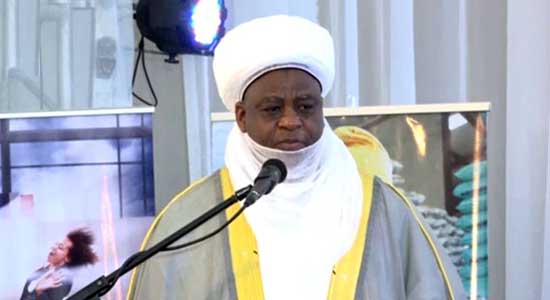
The Sultan of Sokoto, Alhaji Sa’ad Abubakar III, has warned politicians and public officials against using stolen public funds to sponsor pilgrimages to Mecca and Jerusalem. He made this statement at the opening of a stakeholders’ meeting organised by the Nigeria Inter-Religious Council (NIREC) in Abuja on Wednesday.
The Sultan emphasised the need for religious leaders to work closely with anti-corruption agencies to combat systemic corruption. He said, “We, as religious leaders, must fight corruption because God Almighty doesn’t like corruption. You cannot steal money and send people to Jerusalem or Mecca with corrupt funds and think God will accept your deeds.”
He called on the Economic and Financial Crimes Commission (EFCC) to take firm action against corrupt individuals, irrespective of their political or religious affiliations. “Whoever is involved—whether our brothers, sisters, or friends—should face the law. When someone is facing the law, do not bring up their religious title; we do not want to hear that,” he added.
The Sultan also encouraged the EFCC to perform its duties without any political interference, stressing the importance of national unity. He praised NIREC as a vital platform for fostering dialogue between Christians and Muslims, underlining the need for regular interactions to promote peace and stability.
He urged religious leaders to focus on genuine understanding rather than mere tolerance, stating that true understanding fosters better collaboration. The Sultan warned clerics to be cautious with their words from the pulpit, especially during elections, encouraging prayers for national leaders instead of inciting division.
He commended the outgoing Executive Secretary of NIREC, Prof. Cornelius Omonokhua, for his transformative work over the past eight years. Abubakar called for open discussions on national issues, advising participants to avoid spreading rumours in their communities.
Prof. Adedibu Ojerinde, Chairman of the Interfaith Anti-Corruption Advisory Committee, introduced the Interfaith Anti-Corruption Manuals Project, a collaborative initiative between the EFCC and Nigeria’s religious leadership aimed at addressing the nation’s moral crisis. He highlighted the need for anti-corruption themes to be incorporated into sermons to promote public morality.
The meeting was attended by various religious leaders, government officials, security representatives, and members of the media.