







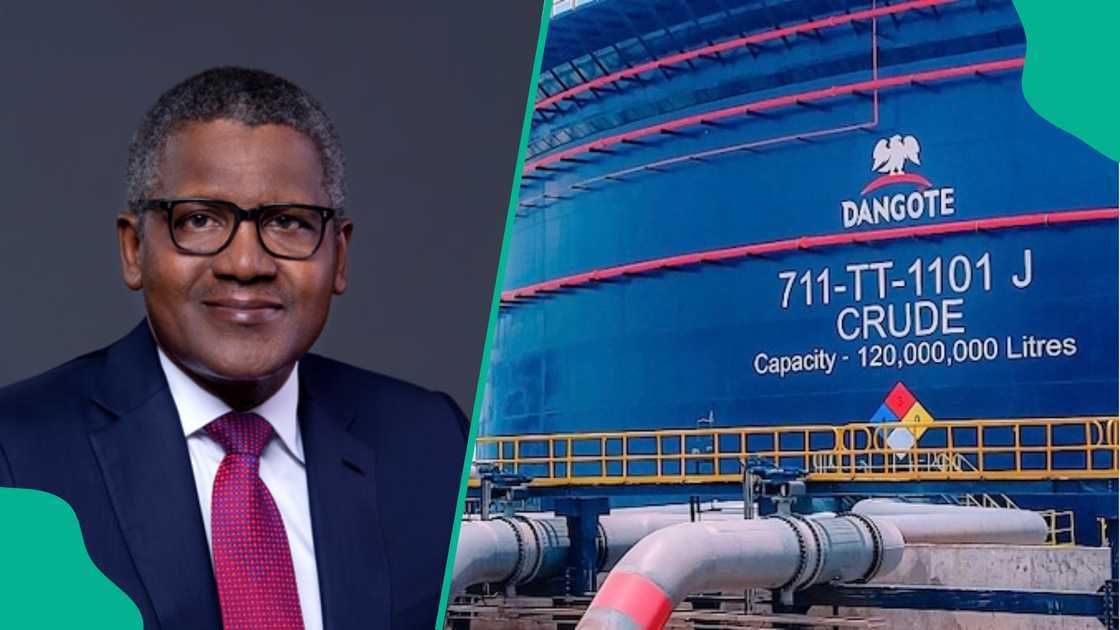
DANGOTE Refinery Moves into Nigeria’s Public Market Amidst Economic Uncertainty
DANGOTE Refinery is entering Nigeria’s public markets at a turbulent time for the global economy. The United States is exhibiting industrial weakness, while long-term financing costs remain high. In contrast, China reports strong industrial production, although domestic consumption and investment are faltering. Europe is facing sluggish industrial activity compounded by rising energy costs. Across Africa, reliance on imported refined petroleum persists despite increasing energy demands.
In the US, manufacturing output fell by 0.3% in August 2026, halting seven months of growth, while overall industrial production remained stagnant. Capacity utilisation is at 76.3%, below long-term averages, although production is still 1.4% above last year’s figures.
For Dangote, the challenge lies more in valuation than in direct demand. To secure a market value near 47.6 billion US dollars, the company must attract global investments, especially as safer dollar-denominated assets become more appealing.
China’s manufacturing indicator saw a slight improvement at 49.8 in August, with industrial output rising by 5.2% year-on-year. However, retail sales merely grew by 0.4%, and fixed-asset investments dropped by 7.2% in the first eight months. This disparity may drive increased competition in refined petroleum products internationally.
Europe’s industrial production dipped by 0.1% in July, with inflation rising to 3.2% in August. The European Central Bank has raised its deposit rate to 2.50% while projecting only 0.9% economic growth in 2026. Weak growth typically signals lower fuel demand, yet energy shortages can yield the opposite consequence for refiners.
Historically, Nigeria has exported crude while depending on imports for refined products, but Dangote is changing this dynamic. Nigerian seaborne petroleum-product shipments averaged 561,000 barrels per day in the second quarter of 2026, a significant rise from 79,000 b/d in 2023. Meanwhile, exports hit around 350,000 b/d, and imports dropped below 130,000 b/d.
In the first half of 2026, Dangote generated over 13 billion US dollars in revenue and about 1.82 billion US dollars in net profit, a marked improvement from a 476 million US dollars loss the previous year. This solid financial performance positions the IPO as more than just a bet on future expectations.
The IPO consists of 4.1 billion shares at 525 naira each, raising approximately 2.15 trillion naira, or 1.6 billion US dollars. The implied equity valuation is around 47.6 billion US dollars. Future earnings will be crucial as investors weigh the potential for growth beyond the current operation.
Dangote plans to double Nigeria’s refining capacity from 700,000 b/d to about 1.4 million b/d, with expansion costs estimated at 14.3 billion US dollars. The market must consider whether the refinery can sustain cash flows, secure financing, and successfully execute such expansion without compromising returns.
Beyond Nigeria, Dangote aims to build an additional refinery near Lamu, Kenya, expected to have a capacity of 700,000 b/d and costing 15-16 billion US dollars. This facility is intended to serve Kenya and surrounding nations. However, East Africa presents challenges, as Kenya lacks sufficient domestic crude supplies to support a large-scale refinery.
Dangote’s operations depend on actual throughput rather than just capacity. Ensuring a steady supply of crude oil remains critical; the company typically needs around 13–15 crude shipments per month but has sometimes received only seven from local suppliers.
The refinery’s strong profitability in the first half of 2026 came amidst global fuel market disruptions, with jet fuel exports to Europe surging as supply tightens. If high margins continue, earnings could stay strong, but normalisation in global refining capacity might lead to narrower margins.
The coming year will depend on refinery utilisation, crude availability, and expansion efforts. Elevated global interest rates could affect required returns from Nigerian equities, while Africa’s ongoing fuel deficit might secure long-term demand.
For investors, the key question remains whether Dangote can translate its scale into sustainable cash flow while navigating global commodity cycles. The success of the IPO will hinge on reliable crude supplies, consistent production, sound capital management, and effective financing strategies.


