







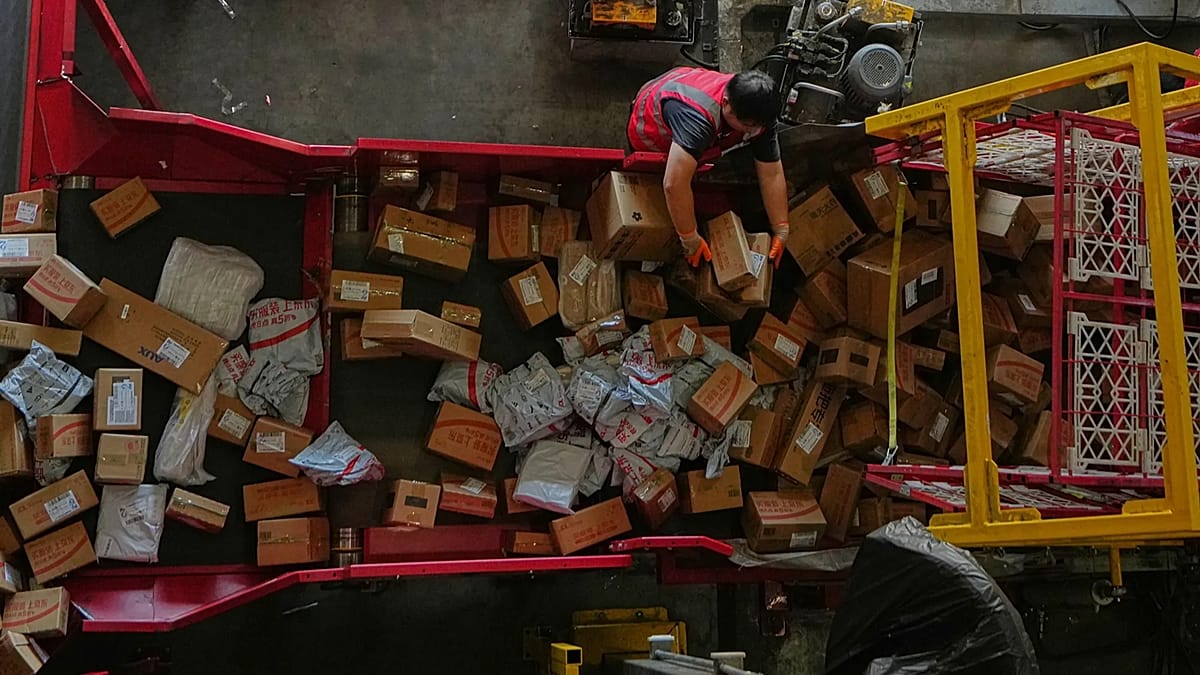
The number of small parcels valued under €150 entering Europe has fallen by nearly 50% since 1 July, following the EU’s introduction of a €3 flat tax on these shipments, according to data from Dutch and Belgian customs.
Belgium has seen a 53% drop in small parcels compared to last year, while Dutch customs reported a 46% decrease in e-commerce parcels, particularly those from China. Together, the two nations account for nearly half of the low-value parcels arriving from outside the EU.
Dutch customs officials suggested that the decline might indicate a shift in business practices due to the new levy. “More companies seem to be opting for bulk import and storage within the EU to resell goods directly to consumers,” they stated, adding that they would investigate the trends further.
The temporary levy was introduced to address the rise of Chinese e-commerce in Europe, which has led to an influx of billions of low-value parcels. In 2024, €4.6 billion worth of low-value items under €150 were imported into the EU, averaging 12 million parcels daily. This marked a sharp increase from €2.3 billion in 2023 and €1.4 billion in 2022.
The sheer volume of parcels and the fragmented European customs structure hinder effective monitoring. Enhanced checks could help prevent the entry of illegal products, which is currently a significant issue. A 2025 study in Contact Dermatitis found that 63% of 111 analysed clothing items contained harmful chemicals.
Dutch MEP Dirk Gotink, responsible for customs reform, remarked, “The €3 import duty has already considerably reduced parcel flow, but there’s more to be done. The new legislation will provide EU and national customs with essential tools to protect businesses and consumers.”
He highlighted that the upcoming customs reform aims to streamline the tracking of items entering the EU, with plans for a central data hub in Lille, France, expected to be operational by 2028.


