


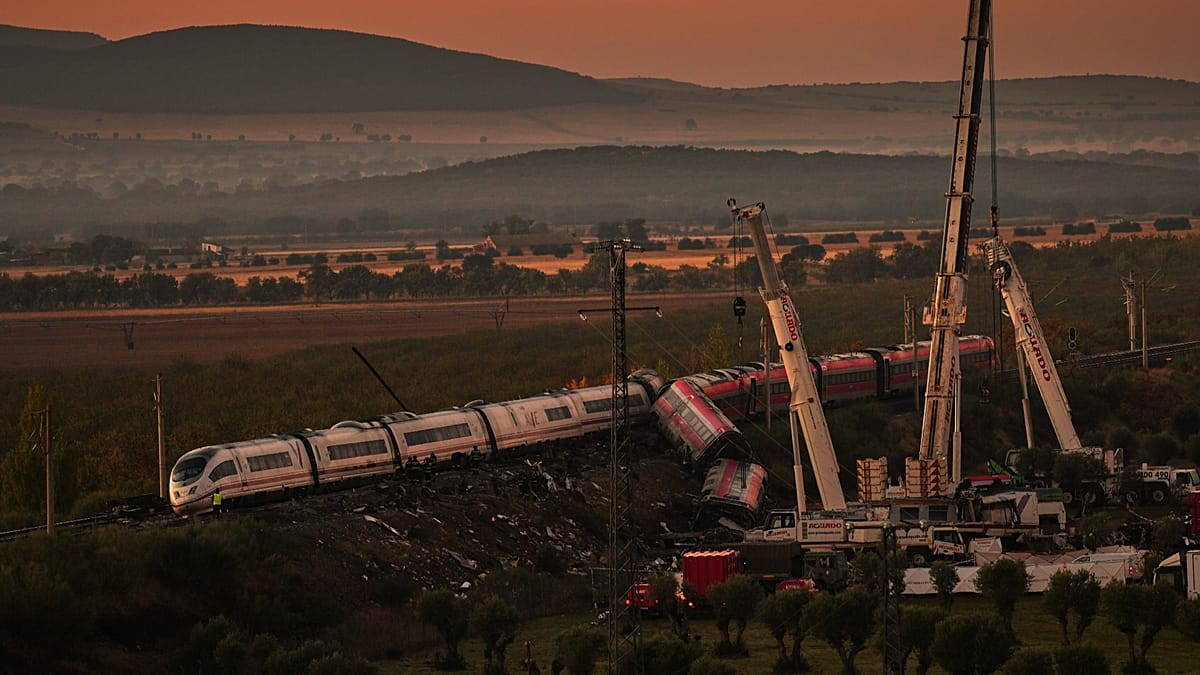
Sixty-nine people died in a high-speed train collision in Spain last week, including four US citizens and one each from Canada, Japan, Argentina, Mexico, Tunisia, and the Czech Republic. This incident is now one of Europe’s deadliest rail accidents of the century.
Victims’ families are enduring a painful wait as forensic teams work to identify their loved ones, often from scattered body parts. A legal body comprising police and forensic experts announced on Sunday that they had confirmed the identities of ten more foreign victims, including one French and one Portuguese citizen, alongside 54 Spaniards. All but three victims have now been identified; two Australians and one Japanese citizen are still missing.
The families of those unaccounted for have indicated a desire to travel to Spain for in-person identification, and authorities are preparing for their arrival.
This was Spain’s second high-speed train collision in 2023, following a January crash in Andalusia that killed 46 people. The recent tragedy unfolded when a train operated by state company Renfe collided with a stationary train from Iryo near Urda, around 130 kilometres south of Madrid. An automatic safety system had halted all trains on a 63-kilometre stretch of track, but a control centre permitted the Renfe service to proceed despite the presence of the other train.
The incident raises further concerns about rail safety in Spain, especially with a general election approaching on 29 November, where Socialist leader Pedro Sánchez aims to extend his eight-year tenure amid unfavourable polling.


