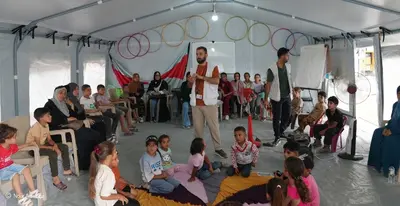


The last three years of intense Israeli military operations have severely affected the mental health of young people in Gaza. Many have lost family, homes, and friends, while ongoing displacement and dire living conditions have robbed children of safe spaces to play and feel nurtured.
The World Health Organization reports that the number of Gazans needing urgent mental health and psychosocial support has surged from around 485,000 to over one million since the conflict began. Mental health care now plays a vital role in the work of Médecins Sans Frontières (MSF), which offers individual consultations, psychosocial and psychoeducational group sessions for adults, and recreational activities for vulnerable children and teenagers.
For older children who remember life before the conflict, their world has been destroyed. The essential joys of childhood—safety, playtime with friends, attending school, and family gatherings—have been replaced by memories of violence and ongoing destruction. Daily tasks now include fetching water, lining up for food, and helping families endure harsh conditions.
Younger children, however, know only chaos and fear, having grown up surrounded by displacement and the sound of airstrikes.
In a poignant contrast, 11-year-old Rahaf’s drawing shows her neighbourhood before and after the conflict. The “before” image depicts a vibrant scene with clean streets, children playing, and a bustling school. In her “after” drawing, however, she portrays a landscape of destruction: tents targeted by drones, injured people, ambulances, and children scrambling for water and food.