


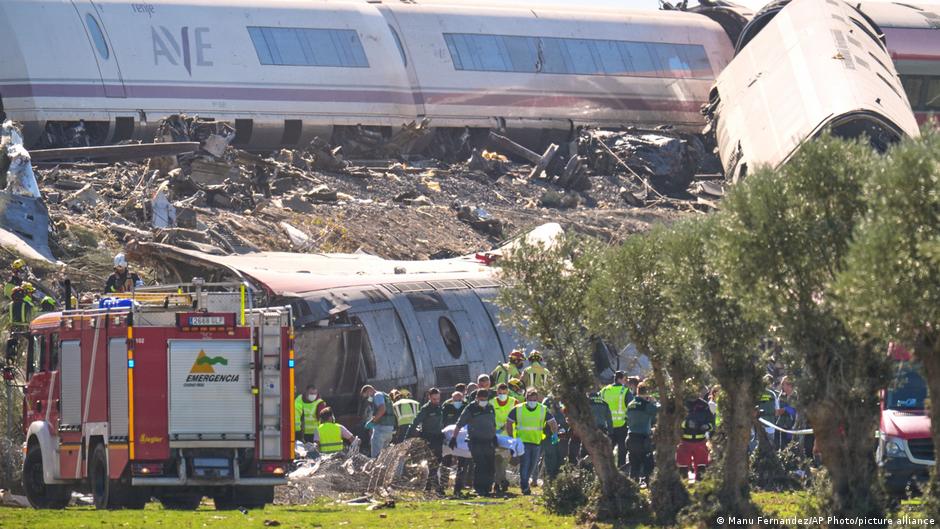
A collision between two trains in Urda has resulted in fatalities. Reports suggest that a train operated by the private Iryo consortium was instructed to stop by the rail infrastructure manager, ADIF, due to a faulty signal, according to a source briefed on the incident.
Officials have yet to confirm the cause of the crash, and neither Renfe nor Iryo has commented on the ongoing investigation.
Nick Kingsley, executive editor of Railway Gazette International, described the incident as a “dark day for the Spanish rail industry,” suggesting that serious questions will arise regarding the circumstances surrounding the crash, which is the second fatal incident on Spain’s high-speed rail network this year.
While he cautioned against speculation at this stage, Kingsley emphasised the importance of safety systems in high-speed rail operations, stating, “This should never happen.” He indicated that investigators would likely compare this incident to a fatal accident that occurred in January.
Kingsley remarked on the rarity of such accidents, noting, “After over 30 years without a single fatal incident on a high-speed rail network, having two in the same year in the same country is quite shocking.”
On what investigators might focus on, Kingsley highlighted the need to establish whether one train indeed crashed into the rear of the other, which would raise concerns about track protection. He explained that a proper signalling system should prevent two trains from occupying the same track section, a fundamental principle of railway operation.
Kingsley cautioned that establishing a clear sequence of events from the accident may take weeks or even months.


