


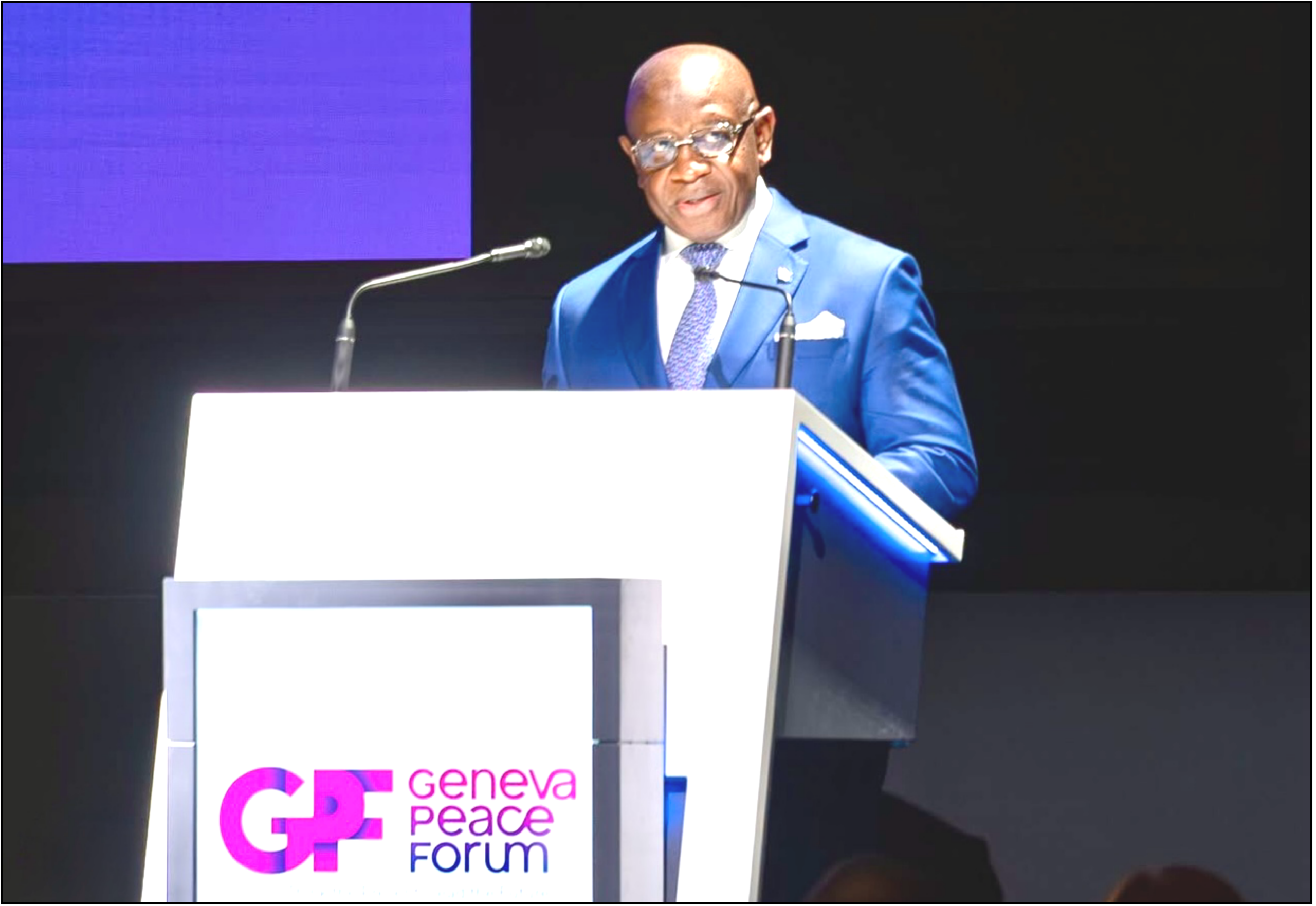
Sierra Leone’s President Dr Julius Maada Bio delivered a striking keynote speech at the Geneva Peace Forum on Monday, 12 October 2026, urging global leaders to focus on preventing conflicts rather than merely addressing their aftermath.
Speaking at the International Conference Centre Geneva, President Bio centred his address on the theme “Choose Peace” and introduced the idea of a “Geneva Commitment to Prevention,” aimed at making early actions in international cooperation both measurable and accountable.
He questioned the tendency of the international community to allocate substantial resources in response to violence while investing less in preventing conflicts. “We are good at dealing with the consequences of war. We must be equally determined to prevent its causes,” he stated, highlighting that the hurdle to prevention lies not just in funding but also in political commitment.
Among his proposals, Bio called for an increased share of international aid to be dedicated to conflict prevention and the publication of annual reports detailing early warning signs and responses.
He emphasised that the forum should be judged not by the declarations made but by the number of conflicts averted and lives saved. Reflecting on Sierra Leone’s tumultuous history, he stressed the importance of recognising the costs of inaction.
Bio recalled a wooden chair at Geneva’s Place des Nations, representing landmine victims, symbolising the resilience of Sierra Leoneans who have rebuilt their lives despite ongoing challenges from the scars of war. “War does not end when the guns fall silent,” he remarked, noting its lingering impact on survivors and affected communities.
With a diverse background as a soldier, military Head of State, and democratically elected leader, Bio underscored the lessons learned from Sierra Leone’s recovery, stating, “Reconciliation, accountability and national recovery are inextricably linked.”
He referred to the country’s declaration in January 2002, “Di wor don don” (the war is over), emphasising that this marked the start of a lengthy recovery process. He acknowledged the need for both reconciliation and justice as vital to the nation’s healing journey.
Bio pointed out Sierra Leone’s transition from peacekeeping recipients to contributors to international missions and its recent role on the United Nations Security Council.
Concerned about global conflicts in Sudan, the Sahel, eastern Democratic Republic of Congo, the Middle East, and Ukraine, he lamented the reactive approach prevalent in the international community, calling for improved early warning systems and the necessary political will to act.
He stressed that conflict prevention requires a comprehensive strategy, involving investment in education, job opportunities, impartial judicial systems, credible elections, and meaningful youth engagement. Bio identified new threats from climate change, misinformation, and cyberattacks, advocating for equitable climate financing and inclusive technology governance.
He asserted that Africa has valuable contributions to offer and called for ongoing dialogue in West Africa, particularly with nations like Mali, Burkina Faso, and Niger, to strengthen shared connections.
President Bio concluded by outlining three essential directives: act sooner, engage longer, and include more voices, particularly from women, youth, and marginalised communities. He urged leaders to embrace the difficult choice of peace, stating, “The greatest victory of peace is not the war we cease; it is the war we shall never allow to start.”
The Geneva Peace Forum gathered international and regional stakeholders to discuss conflict prevention, peacebuilding, and actionable peacekeeping strategies. In his address, President Bio called for a shift from mere declarations to concrete commitments in preventing future conflicts.


