




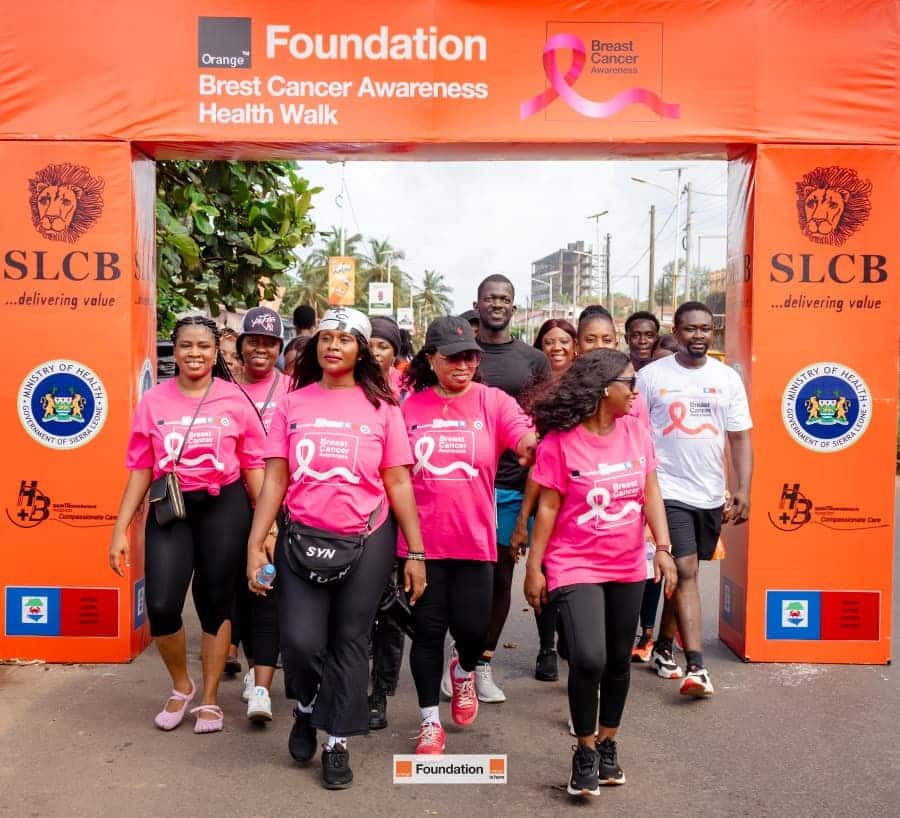
Orange Foundation Sierra Leone, in partnership with Sierra Leone Commercial Bank, launched its 2026 Breast Cancer Awareness Campaign on 3rd October 2026. This initiative aims to provide free screenings, treatment support, and health education to over 5,000 women across Sierra Leone.
The campaign kicked off with an eight-kilometre awareness walk from the Cotton Tree in central Freetown to Kallon Car Park at Aberdeen Beach. The event attracted healthcare professionals, breast cancer survivors, government officials, and members of the public, all rallying to highlight the vital importance of early detection and treatment.
Madam Aïcha Touré, CEO of Orange Sierra Leone, emphasised the campaign’s goal of saving lives by improving access to early diagnosis and suitable treatment. Since 2015, the Orange Foundation has supported breast cancer initiatives, benefiting over 2,500 women through screening in 2025. This year, the Foundation aims to extend its reach, particularly to underserved communities with limited healthcare access.
“We want to reach more women, especially in areas where access to healthcare is difficult,” Madam Touré stated, stressing the campaign’s aim to safeguard the lives of mothers, sisters, and friends. Many women often seek help only after cancer has progressed, making early detection crucial.
“Our message is clear: get screened early, and if you need care, pursue your treatment,” she urged. Madam Touré described the campaign as a means to empower women and engage men to support them through the screening and treatment process.
Professor Dr. Charles Senneh, Deputy Minister of Health, commended the collaboration of Orange Foundation and its partners in enhancing healthcare. He highlighted the importance of breast cancer screening as part of preventive care, noting that early detection significantly improves treatment outcomes. The government is also committed to establishing a state-of-the-art cancer treatment centre and expanding mammography services beyond Freetown and Kenema.
“Women’s health is everybody’s business,” said Professor Senneh, calling for stronger collaboration among the government, private sector, healthcare providers, and development partners. He stressed the need for ongoing education and awareness efforts beyond October.
Dr. Isaac Olufemi Small, a surgical oncology specialist at Connaught Hospital, reiterated that breast cancer is treatable, especially with early detection. He encouraged women to regularly examine their breasts and report any unusual changes to health workers. He also pointed out that while less common, men can also be affected by breast cancer and should seek medical attention if needed.
Ibrahim Tito Sankoh, manager at Sierra Leone Commercial Bank, reaffirmed the bank’s commitment to health initiatives, stating the active participation of staff in the campaign reflects their dedication to improving community health. He urged women to have regular check-ups, reinforcing that early detection can save lives.
For breast cancer survivors involved in the walk, the campaign served as a message of hope and an affirmation of the importance of early detection and treatment. The 2026 campaign unites government, private sector, healthcare professionals, survivors, and communities in a collaborative effort to raise awareness and enhance access to screening and treatment for breast cancer throughout Sierra Leone.


