



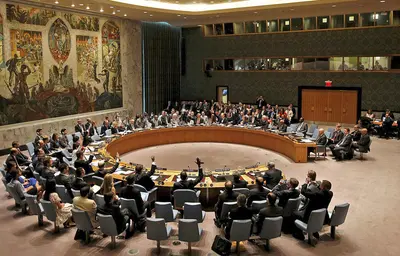
Reform of the United Nations (UN) is increasingly viewed as a necessary response to shifting geopolitical dynamics, rather than merely a quest for efficiency. Some Western nations are concerned that their substantial financial investments are losing the influence they once guaranteed, particularly as emerging powers shoulder a larger share of the UN’s costs. This reform dialogue extends beyond budgetary limits; it reflects challenges in governing an increasingly complex international landscape.
Since its inception in 1945, the UN has undergone significant changes over three main periods. Initially, the organisation grew swiftly during decolonisation; the Cold War turned newly independent states into battlegrounds for diplomatic rivalry; and recent decades have seen China’s rise and a declining Western influence, along with greater agency among Global South countries. Each of these transitions has compelled the UN to adapt to new members and evolving priorities for representation.
Western influence has been a cornerstone of the UN since its establishment, which began with 51 member states, while many parts of Asia and Africa were still under colonial rule. Decolonisation led to an increase in General Assembly membership from 60 in 1950 to 127 in 1970. However, this surge did not disrupt the existing hierarchy, with Western nations retaining significant control over key international institutions, including those governing development finance and trade.
For the US, the UN has always been more than just a budget line; it is integral to a broader system of influence. The US and its allies have historically funded multilateral initiatives because the UN helps uphold the global order they established. Peacekeeping, state-building, and development aid align with both strategic interests and commitments to global cooperation.
The Cold War intensified competitive dynamics within the UN, frequently leading to stalemates in the Security Council. Both the Western and Soviet blocs sought legitimacy and votes, using funding for UN agencies and initiatives as leverage to expand their influence and promote differing development models.
Following the Cold War, Western power initially seemed unchallenged. However, the emergence of China changed the global economic and diplomatic balance, particularly in Africa and Asia. By 2025, China’s nominal GDP is projected to reach about $19.5 trillion, solidifying its status as the second-largest economy globally and the leading merchandise exporter, accounting for around 14.6% of global exports.
In Africa, the shift in power dynamics is striking. Trade between China and African nations reached a record $282.1 billion in 2023, with China being Africa’s largest trading partner for 15 consecutive years by 2024. Countries that once relied heavily on Western markets now have a wider array of partnerships. World Bank data highlights the connections among Chinese trade, investment, and infrastructure undertakings across Africa, although the results vary significantly by country and initiative.
China’s growing influence is apparent within the UN as well. It has become the second-largest assessed contributor to both the regular budget and peacekeeping operations. Under the 2025-27 budget, the US is responsible for 22% of costs, while China’s share is 20.004%. In the upcoming peacekeeping budget, the US will contribute 26.95%, and China will contribute 18.69%. Furthermore, China has dispatched over 50,000 peacekeepers since 1990, establishing itself as a significant player in UN operations, although it has not displaced the US from its top position.