







If you’ve been reading about Sierra Leone and something isn’t adding up between the beach photos and what you’re actually seeing on the ground, you’re not imagining it. This is the article that says the quiet part out loud.
Sierra Leone Isn’t Waiting to Be Discovered. It’s Waiting to Stop Being Robbed.
Sierra Leone is one of the most naturally gifted countries on the planet, and it’s also one of the most consistently let down by the people who run it. That combination, of real beauty and real institutional failure sitting right next to each other, is what makes this place so difficult to write about honestly.
You’ll hear about the white sand at Tokeh Beach, where the light hits the water at an angle that makes you stop walking and just stand there for a moment. You’ll hear about the warmth of people in Freetown who’ll share a meal with a stranger before they’ve asked your name. That’s all real. Don’t let anyone tell you it isn’t.
But underneath all of it sits a governance structure that has, generation after generation, funnelled the country’s diamond wealth, its fishing rights, its mineral contracts, into the hands of a small elite while the majority of Sierra Leoneans navigate crumbling hospitals, schools that exist mostly on paper, and roads that disappear entirely when the rains come. And they come hard.
This isn’t ancient history. It isn’t a legacy of the civil war that ended in 2002, though that gets cited often enough that it starts to feel like a convenient excuse. It’s happening right now.
What the “Authentic Africa” Posts Are Actually Saying
There’s a version of Sierra Leone travel content that makes me genuinely uncomfortable. The “raw energy.” The “unfiltered beauty.” The fact that it “hasn’t been touched by mass tourism yet.” I understand the impulse. I’ve felt it myself standing on Bureh Beach with nobody else around, the surf loud and the air thick with salt and something green from the hills behind me. It’s a real feeling.
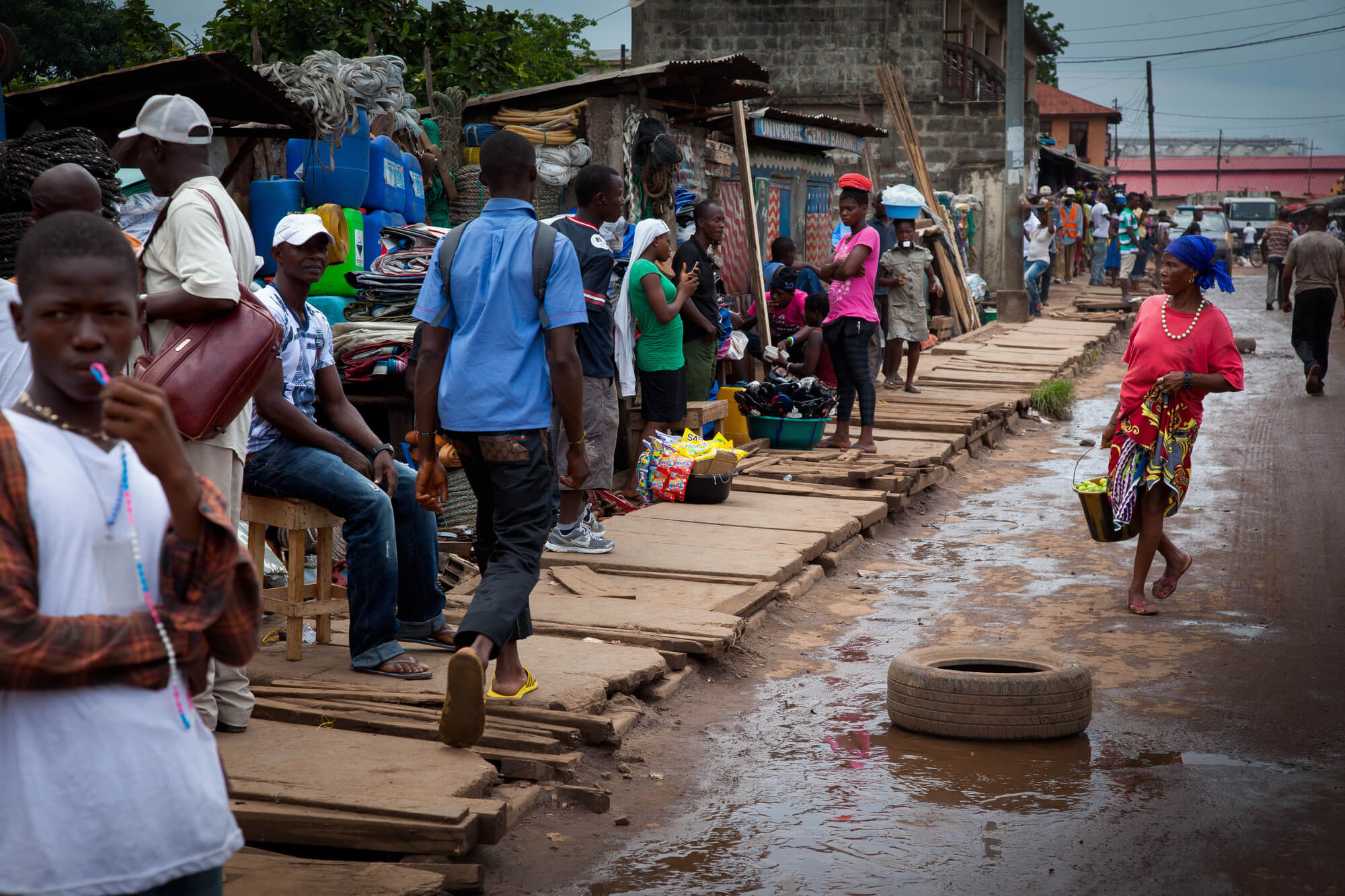
But that language is doing something else at the same time. It’s reframing the consequences of chronic institutional failure as atmosphere. It’s taking the fact that there’s no reliable electricity grid, no functioning public health system, no road infrastructure worth the name, and packaging it as charm.
The people living those consequences aren’t providing your holiday with texture. They’re trying to get through the day in a country that keeps failing them. Visitors who post about “authentic Africa” without naming what’s actually producing that authenticity aren’t lying, exactly. They’re just not paying attention to the right things.
The Diamonds, the Fish, the Minerals, and Where the Money Goes
Sierra Leone has been producing diamonds since the 1930s. It has iron ore deposits that drew serious international mining investment. It has rutile, one of the world’s primary sources of titanium. Its fishing waters are among the most productive on the entire West African coast.
So ask yourself the obvious question. Where does it go?
If you look at Transparency International’s Corruption Perceptions Index, Sierra Leone sits in the bottom third globally, year after year. The contracts get signed. The royalties get negotiated, often at rates that make economists wince when they read them. And somehow the money doesn’t find its way into the places you’d expect if the goal were actually to serve the population.
I want to be careful here, because this isn’t a simple story and I don’t want to pretend it is. Colonial extraction, cold war interference, a brutal civil war funded partly by conflict diamonds, these things happened and they matter. But the civil war ended more than twenty years ago. At some point “legacy of the past” stops being an explanation and starts being a shield.
What Freetown Actually Feels Like When You Arrive
Freetown hits you immediately and without apology. It’s loud in a way that’s almost physical. Generators run constantly because the grid isn’t reliable enough to depend on, and you hear them everywhere, a low mechanical hum underneath everything else. Motorbikes thread through traffic with a fluency that would be alarming anywhere else but feels completely normal within about an hour of arriving.
The air smells of diesel, and something faintly smoky, and if you’re close enough to the water there’s salt in it too. Aberdeen, the peninsula’s western edge, has that quality in the early morning where the smell shifts and it’s mostly sea, and it’s the closest thing Freetown has to quiet.
People will talk to you. Not in the guided-tour way. In the way that people who are genuinely curious about strangers talk to them. You’ll be offered food before you’ve introduced yourself. You’ll have conversations that go somewhere you didn’t expect. That part is absolutely true and it’s one of the things that makes Sierra Leone worth the effort.
But you’ll also notice the other thing. The NGO Land Cruisers parked outside guesthouses that price in dollars. The expat bubble, well-meaning for the most part but sealed off from daily Sierra Leonean life in ways that are quietly uncomfortable to witness. The international development industry has been present in this country for decades. The country is still ranking where it ranks. That’s worth sitting with longer than most visitors do.
Is It Safe to Travel to Sierra Leone Right Now
This is usually what people are actually searching for, so let’s deal with it directly.
Sierra Leone isn’t in active conflict. The civil war ended in 2002 and the country has held several elections since, imperfect ones, but elections. Freetown has crime, the kind of petty theft and opportunistic scams you’d find in any city where economic inequality is this visible, and you should take the same precautions you’d take anywhere: don’t flash expensive gear, don’t walk alone in unfamiliar areas after dark, keep your phone in your pocket rather than your hand.
The UK Foreign Office travel advisory for Sierra Leone is worth reading before you go, not because it’ll tell you not to go, but because it’ll give you a realistic picture of what to watch for. Healthcare is the bigger practical concern. Malaria is present. Medical facilities outside Freetown are extremely limited, and even within Freetown they’re not what most Western travellers are used to. Get your jabs, get your malaria medication, and get decent travel insurance that covers medical evacuation. That’s not overcaution. That’s just sense.
The Places That Are Actually Worth Going To
Tokeh Beach is the one that gets written about most, and it earns it. The sand really is that white. The water really is that clear. On a weekday morning before the Freetown day-trippers arrive, it’s one of the more genuinely peaceful places I’ve been in West Africa.
Bureh Beach is less visited and worth the extra effort to get there. The road is rough and the journey from Freetown takes longer than you’d expect from looking at a map, but the surf is good and there’s far less of a scene. If you want somewhere that feels like it belongs to you for an afternoon, Bureh is the better call.
Banana Islands, if you can organise the boat, are the kind of place that’s hard to describe without reaching for language I’ve already told you to distrust. I’ll just say: go if you can, and take more water than you think you’ll need.
In Freetown itself, the Cotton Tree, the enormous silk-cotton tree that’s stood at the centre of the city for centuries, is worth ten minutes of your time. Not because it’s spectacular in a visual sense, though it’s impressive, but because it’s one of those things that makes you feel the actual weight of the city’s history. Freetown was founded by freed slaves. The Cotton Tree was where many of them gathered when they arrived. Standing under it and knowing that is a different experience from standing under it without knowing it.
The Food Nobody Actually Tells You About
The groundnut soup will be thicker than you expect and hotter than you’re ready for, and you’ll order it again the next day. Plasas, leafy greens cooked in palm oil with fish or meat, is what people actually eat rather than what gets served to tourists, and if you can find it cooked properly it’s one of those dishes that resets your idea of what simple food can be.
Cassava leaf stew takes time to make properly and the versions you get at street level in Freetown vary enormously. I had one near the Big Market that was genuinely one of the better things I’ve eaten anywhere, and one near the waterfront that was barely worth finishing. Ask locals where they eat rather than where they send visitors. The answers will be different.
Why “Full of Potential” Is the Most Insulting Thing You Can Say About Sierra Leone
Every article about Sierra Leone, every development report, every diplomatic speech, lands eventually on the same phrase: “full of potential.” It’s meant kindly. It’s also, if you think about it for more than a moment, an extraordinarily low bar to keep setting for a country that has been producing diamonds and minerals for nearly a century.
Potential is what you have before anything has happened. Sierra Leone has had things happen. Resources have been extracted. Contracts have been signed. Money has moved. The question isn’t whether the potential exists. The question is who keeps capturing the value and why the answer to that question never seems to change.
The people who live here aren’t potential. They’re people who deserve functioning infrastructure, healthcare that works, schools with teachers in them, and leaders who are accountable to them rather than to whoever’s offering the better deal on the mineral rights. Describing the country as “full of potential” is a way of talking about its geography while quietly not talking about its politics. It’s comfortable. It’s also not honest.
What Travellers Can and Can’t Actually Do About Any of This
Spend your money with local guesthouses rather than internationally owned hotels. Hire local guides rather than booking through operators who send the margin abroad. Eat at local restaurants. Buy things from local markets. None of this is going to fix anything structural, and anyone who tells you that “responsible tourism” is a solution to what’s happening in Sierra Leone is selling you a story that lets everyone off too easily.
What it does do is put money in the hands of people who actually live here rather than into accounts that are somewhere else entirely. That’s not nothing. It’s just not enough, and it’s worth being clear-eyed about the difference.
The structural problems in Sierra Leone require political accountability, better governance, renegotiated resource contracts, and citizens with the power to demand all of the above. Those things aren’t in a tourist’s gift. What’s in your gift is to pay attention, to spend well, and to write and talk about this place honestly when you get back rather than reaching for the beautiful-but-complicated Instagram version.
Sierra Leone is worth visiting. It’s genuinely, specifically, particularly worth visiting, not because it’s “unspoilt” or because you’ll feel like a pioneer, but because it’s a place of real depth and real beauty and real people living complicated lives in a country that keeps being let down by the systems that are supposed to serve them.
Go with your eyes open. Talk to people. Eat the food. Swim at Tokeh. Get to Bureh if you can manage it. And when someone asks you what Sierra Leone was like, resist the easy version.
The country doesn’t need more people describing it as full of potential. It needs more people willing to ask what keeps happening to all of it.


