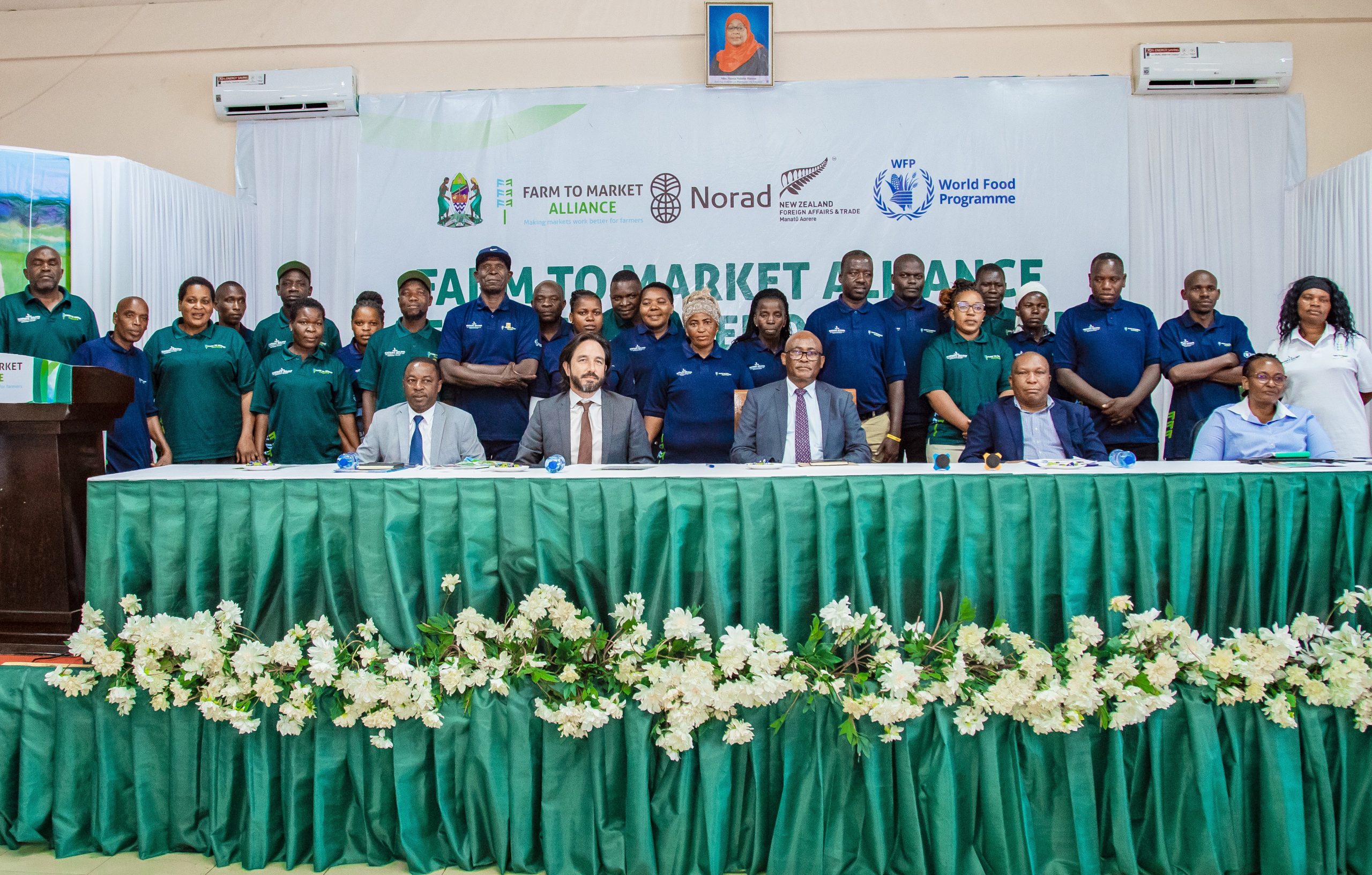
The Tanzanian government is urging successful Farmer Service Centres (FSCs) to scale up operations and mentor new businesses. This comes as Tanzania aims to sustain a system that has linked over 250,000 smallholder farmers to agricultural services and markets.
Professor Peter Msofe, Deputy Permanent Secretary in the Ministry of Agriculture, highlighted the role of these centres in establishing partnerships among government, private sectors, and development organisations, making vital services more accessible to farmers and enhancing rural agribusiness.
At an event marking the end of the 10-year Farm to Market Alliance (FtMA) programme, he stated that the conclusion of this initiative should not signal the demise of the FSC model, which has established 924 centres across 18 districts. “True success is not measured by investment size but by the capacity of results to endure and grow post-funding,” he noted.
Professor Msofe indicated that 108 centres have met required standards and urged their operators to guide others in expanding the network. “If each of the 108 successful centres opens another, we could boost this number to 216 and celebrate 500 centres serving farmers next year,” he added.
He described FSCs as hubs for rural agribusiness that go beyond simple agricultural input shops, offering quality seeds, fertilisers, mechanisation, advisory services, financial assistance, market insights, and buyer connections. Additionally, the centres aggregate produce from smallholder farmers, facilitating access to larger markets while helping to improve quality and reduce transport costs.
The Professor emphasised that the model bolsters the government’s agricultural transformation agenda as outlined in the Agriculture Master Plan 2050, advocating for enhanced access to quality inputs, climate-resilient technologies, storage, processing, markets, and affordable finance.
Implemented by the United Nations World Food Programme (WFP) with support from New Zealand and Norway, the FtMA programme has achieved significant milestones. It has facilitated the aggregation of over 254,000 tonnes of produce valued at over $52 million, while farmers and centres accessed inputs and services worth more than $15 million. The network includes 408 youth-led centres and has reached around 95,000 women and 70,000 young farmers.
Ronald Tran Ba Huy, WFP Country Director in Tanzania, affirmed the sustainability of the centres as commercially viable agribusinesses capable of supporting farmers beyond the programme’s end. He stressed that continued success depends on commitment from the government, financial institutions, private sector, development partners, and research organisations.
“WFP will integrate the Farmer Service Centre approach into broader resilience, livelihoods, and market assistance initiatives,” he said.
Anastasia Mbatia, Deputy Managing Director of FtMA, noted the model’s adaptability in varying agricultural settings, including cooperatives and individual enterprises. The alliance has reached over 700,000 farmers through more than 3,000 centres in Tanzania, Kenya, and Rwanda.
The programme’s impact is evident through individual success stories, such as Dorah Mkelele from Mufindi District. She credited training, business forums, and market linkages with transforming her agro-input enterprise, stating, “FtMA transformed me from an ordinary farmer into a successful entrepreneur serving hundreds of farmers.”