


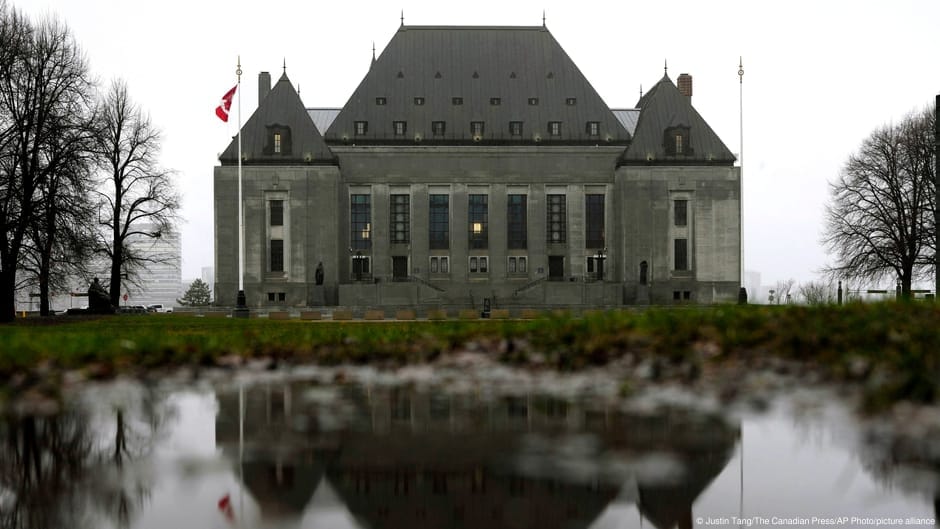
Canada’s Supreme Court upheld Quebec’s ban on public servants wearing religious symbols on Friday, while allowing provincial lawmakers to don such symbols in the National Assembly.
The law, passed in 2019 as Bill 21, was justified by Quebec’s government as essential for maintaining a secular society. It prohibits public service workers, including teachers and police officers, from wearing overt religious symbols like hijabs, turbans, and yarmulkes.
Chief Justice Richard Wagner stated that the law reflects Quebec’s commitment to state secularism within a democratic framework.
Mathieu Levesque, interim leader of the right-wing Quebecois nationalist Coalition Avenir Québec (CAQ), called the ruling a “victory” for the province. He declared, “This is a victory for the Quebec nation and for CAQ, whose actions have today been fully validated.” The CAQ ruled from 2018 until 2026, after which the pro-independence Parti Québécois, which also backed Bill 21, took power.
The case tested the extent to which provinces can invoke the “notwithstanding clause,” allowing them to pass laws that might contradict the federal constitution. Quebec invoked this clause while passing Bill 21, anticipating challenges based on freedom of religion guarantees.
Critics argue that the law disproportionately affects Muslim women and undermines rights protections. Stephen Brown, CEO of the National Council of Canadian Muslims, warned that the ruling empowers governments to strip away fundamental freedoms and legal rights. He noted that many Muslim women have felt compelled to leave teaching roles or refrain from volunteering in schools due to the law.
Emmett Macfarlane, a political science expert at the University of Waterloo, described the legislation as “Islamophobia as a state policy.”


