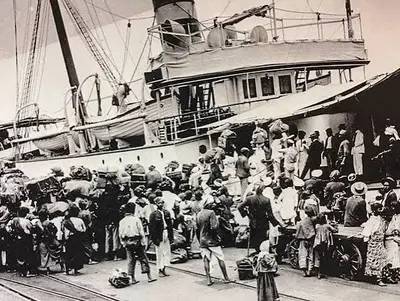


Indian Arrival Day on 16 November marks 166 years since the SS Truro arrived at Port Natal, highlighting the ongoing impact of the indenture system on South Africa’s political and cultural fabric.
While this rich heritage is celebrated, it is important to remember that it was built on the backs of labourers stripped of their identities. When they landed in Durban in 1860, their names were replaced by numbers, reducing them to mere statistics devoid of history or humanity.
A century later, Trinidad-born Nobel Laureate V.S. Naipaul addressed these experiences in his novel A House for Mr Biswas, shedding light on the untold stories and truths of indenture.
Today, writers such as Joanne Joseph, Aziz Hassim, and Ronnie Govender draw on oral histories often shared in stigmatised languages. Their work captures the essence of cultural practices like music, dance, and food, while also reflecting intergenerational trauma stemming from the indentured experience.
The narratives of race, class, gender, and identity intertwine in these stories, offering a multifaceted view of the lives of the 1860 settlers. However, many of these accounts emerged only after the closure of colonial and apartheid-era barriers to publishing, which sought to erase the history of indenture.
In their book Inside Indian Indenture: A South African Story, 1860-1914, Professors Ashwin Desai and Goolam Vahed detail the harsh realities faced by settlers, including starvation, violence, and loss of freedom.
I discovered my own family’s history: my great-grandfather Kirpan travelled from Calcutta to Port Natal in January 1907, accompanied by his wife Maima, when he was just 22. The name Kirpan signifies compassion and dignity, showcasing the irony of how indenture stripped individuals of their identity and humanity.
Research reveals that recruitment agents often coerced young men and women through deceitful means. Scholar Selvan Naidoo notes that many were forced aboard ships, while Uma Dhupelia-Mesthrie has investigated allegations of abductions in India and Natal.
With little recourse, labourers endured horrific conditions, as chronicled by researcher Duncan Du Bois, who highlights the closed nature of colonial society which deterred intervention.
The promise of prosperity was a cruel deception, with low wages and punitive fines keeping workers bound to servitude. Many labourers left India to escape famine, only to face even greater hardships.
Growing interest in these migrant stories reveals a broader quest for identity and belonging. Leaders like Selvan Naidoo and Krish Gokool head initiatives at the 1860 Heritage Centre.
Last November, the High Commission of India in Pretoria extended an opportunity for the descendants of indentured immigrants to apply for Overseas Citizenship of India (OCI) cards, furthering the reclamation of identity.
Despite the harsh realities during their tenure, the legacy of indenture in Natal is one of resilience. It offered descendants a roadmap to rise above adversity, pursue education, and fight oppression, ultimately fostering close-knit communities.
Even under restrictive circumstances, such as during apartheid, aspirations persisted. Their greatest legacy—an abundance of stories—continues to inspire today. Tales shared in Chatsworth homes or Lenasia suburbs, some becoming viral, connect to a global diaspora honouring Indian Arrival Day and its narratives that reshape history.
Sudhana Singh is a British author, journalist, and speaker, and the great-granddaughter of indentured labourers, having grown up in apartheid South Africa.