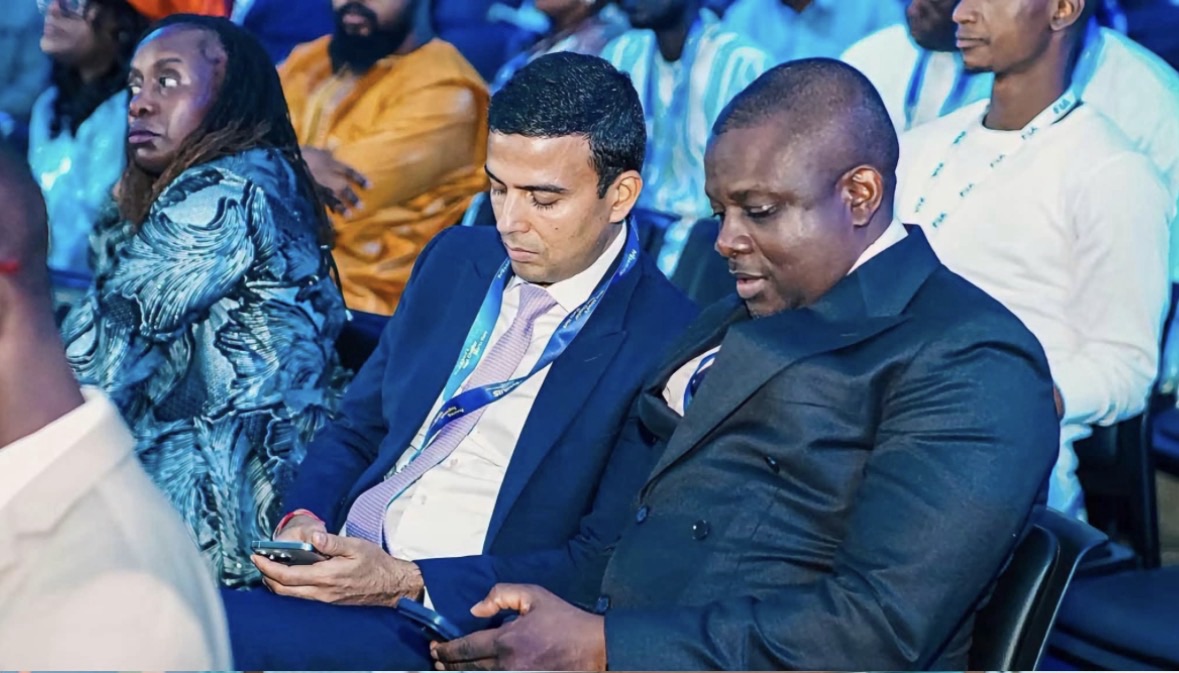





Foreign Affairs Minister Mohamed Rahaman Swaray has called for improved public services and stronger performance as Sierra Leone embarks on efforts to enhance its Foreign Service. He made this appeal during a meeting with ministry staff, mission heads, and directors, where he presented a reform vision focused on continuity, professional standards, citizen protection, and economic diplomacy.
This meeting followed consultations with ministry officials and senior government leaders, as the ministry gears up for a 100-day reform programme that aligns with the government’s Big Five Game Changer agenda and the Medium Term National Development Plan.
Director-General Alan C.E. Logan reported that Mr Swaray has been consulting widely since taking office. He also introduced Deputy Minister Jeneba J. Bangura, highlighting her extensive experience in revenue policy as an asset for the ministry’s reform efforts.
The 100-day reform plan centres on five main priorities: institutional accountability, citizen protection, diaspora services, economic diplomacy, and regional engagement. Mr Logan stated that the approach aims to enhance evidence-based decision-making and ensure better delivery within the existing diplomatic framework.
Mr Swaray noted that his appointment signifies a continuation of existing foreign policy but with a stronger focus on results and service delivery. He acknowledged the need for diplomacy to justify its funding and emphasised that improved performance should be a measure of the ministry’s value. “Let us do more. Let us push boundaries,” he encouraged.
Economic diplomacy is a crucial part of this vision. Mr Swaray stated that the country’s diplomatic missions must actively attract investment and promote Sierra Leone’s products and services. He described diplomats as “front-line marketers,” urging them to identify opportunities and foster relationships that present Sierra Leone as a viable destination for trade and investment.
The Chief Minister highlighted investment prospects with India, China, and the UAE, stressing the importance of investor protection. Discussions around recent scams have underscored the need for stronger safeguards to reduce reputational risks.
Mr Swaray also prioritised improving services for Sierra Leoneans abroad. He criticised outdated procedures that force citizens to travel long distances for consular services, suggesting a shift towards greater use of technology. “People can stay where they are and still get services whenever they want,” he remarked.
Digital transformation will play a key role in the reforms. Mr Swaray mentioned that online platforms could enhance communication and service delivery, and underscored the importance of responsive mission staff during emergencies.
The minister called on Foreign Service personnel to elevate professional standards and deepen their knowledge of global affairs. He advocated for a merit-based system where professional competence is valued over rank.
He acknowledged an ongoing investigation but refrained from commenting on its outcome. Continuous professional development and longer attachments for returning diplomats were also discussed as essential for mentoring younger officers.
Strengthening diplomatic missions’ capacity is central to the reform, with an emphasis on having well-trained leaders and competent front-desk personnel. Additionally, structured procedures and training for mid-level officers have been identified as crucial for enhancing institutional performance.
Mr Swaray’s consultations are aimed at garnering institutional support for the reforms and addressing potential implementation challenges. Further engagements, including a retreat for mission staff, are planned to strengthen coordination and secure external resources.
The goal of the reform is to create a Foreign Service that is accountable and results-focused, with ongoing commitment to protect citizens abroad. “We are saying to the world: Sierra Leone is ready for business,” Mr Swaray stated, urging the ministry’s personnel to support and realise the programme’s priorities. He concluded by expressing gratitude to the staff for their engagement and ensuring continued consultation as reforms take shape.