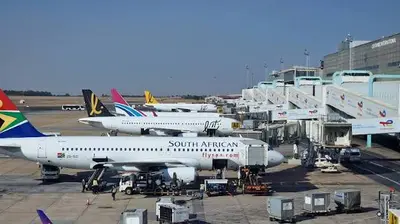
On 26 November 2006, Libyan leader Muammar Gaddafi arrived in Nigeria to attend the African and South American Heads of State Summit. At the time, I was the Minister of Aviation and had the privilege of welcoming him at the airport, representing President Olusegun Obasanjo. I was assigned to accompany Gaddafi for the next four days.
Gaddafi’s arrival was dramatic, featuring nearly 200 bodyguards armed with sidearms and around 100 vehicles, all loaded with AK-47s and other sophisticated weapons that had been transported on his three planes. As we attempted to leave the airport in a convoy, Nigerian security officials and the military blocked us due to the weapons in the vehicles. While Gaddafi and his delegation could enter with their sidearms, the heavy arms had to remain at the airport.
I was in Gaddafi’s car and had the difficult task of relaying this message through his interpreter. We made three unsuccessful attempts to leave, each escalating tensions. In a fit of anger, Gaddafi exited the car and began walking towards Abuja, insisting he would proceed on foot. All his 200 bodyguards followed.
I panicked, fearing he would collapse in the heat as he was already sweating heavily. I called President Obasanjo, who was fortunately en route to the airport. He told me to inform Gaddafi he was coming to resolve the situation directly. When I relayed this, Gaddafi agreed to return to the airport.
Upon arrival, the two leaders greeted each other warmly. However, Gaddafi raised the issue of being blocked at the gate. Obasanjo acted as if he was unaware of the situation, apologising and promising to open the gates immediately. As he walked past me, he quietly instructed me that Gaddafi and his team would not be allowed in unless they relinquished their heavy weapons.
After some heated discussions with Gaddafi’s security and protocol officers, who were quite rude, we managed to have the weapons removed and returned to the plane. With the situation defused, we were allowed to leave the airport.
During the drive into Abuja, Gaddafi remained silent, speaking only to compliment the Central Mosque’s beauty. This encounter taught me a great deal about diplomacy, particularly the importance of firmness and mutual respect. Our security forces upheld the directives strongly, and Obasanjo’s decisive actions ensured compliance, preventing Gaddafi from bringing in dangerous arms that could have ended up in the hands of local insurgents.
Five years later, on 20 October 2011, Gaddafi was killed by his own people in Sirte. I watched the footage of his death on CNN, saddened by such brutality. His violent end is a stark reminder of the impermanence of power and its accompanying vanities. Ironically, the Protocol Head who once threatened to fly Gaddafi home was among those condemning him when he was killed. Such is life.
(Ambassador Olufemi Fani-Kayode is Nigeria’s High Commissioner to South Africa, Lesotho, and Eswatini, a former Minister of Culture and Tourism, and a former Minister of Aviation.)