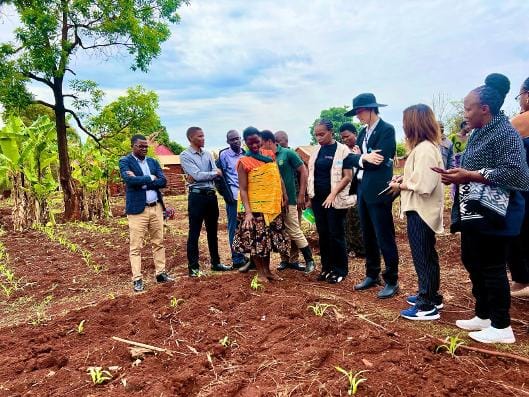
Women farmers in Kigoma Region are increasingly embracing climate-smart agricultural techniques as local authorities enhance disaster preparedness and ensure that women’s needs and experiences are integrated into plans for disaster risk reduction and climate resilience.
This development came to light during a visit by representatives from the Government of Japan and UN Women to Kigoma Region on 11 and 12 November, aimed at evaluating progress on a project designed to fortify gender-responsive disaster preparedness and climate resilience.
Funded by Japan and implemented by UN Women in collaboration with the Tanzanian government and Kigoma regional authorities, the initiative aims to enhance communities’ capacity to anticipate, prepare for, and respond to climate-related disasters. A key focus is ensuring women’s meaningful participation in decisions affecting their livelihoods, safety, and wellbeing.
The initiative acknowledges that climate-related disasters impact individuals differently. Women, especially those reliant on agriculture, often face heightened challenges due to limited access to resources, information, and decision-making forums.
Lilian Mwamdanga, Programme Specialist for Women’s Economic Empowerment at UN Women Tanzania, emphasised the importance of addressing these inequalities to bolster household livelihoods and strengthen community resilience against disasters. She highlighted that while women play a crucial role in preparing for and recovering from emergencies, their contributions can be undermined without access to essential resources and information.
The delegation visited Kasulu District to engage with women farmers, local leaders, and project partners to see how interventions were translating into practical outcomes. Discussing progress and challenges, they focused on support needed to sustain initiatives in light of increasingly unpredictable weather.
One significant aspect of the project is enhancing agricultural livelihoods through climate-resilient farming practices, vital for communities where agriculture is the primary income source. In partnership with the Ministry of Agriculture Training Institute (MATI) Mubondo, over 700 farmers across 20 wards have undergone training in climate-smart agriculture, soil and water conservation, post-harvest management, and community disaster preparedness.
Women make up a substantial proportion of the participants, highlighting their essential role in agricultural development and in safeguarding rural livelihoods from climate shocks. In addition to training, the project has provided farmers with seeds and inputs to help implement what they’ve learnt this planting season.
During the visit, the delegation observed farmers in Msambara Ward applying conservation techniques to tackle the challenges posed by changing weather patterns, aimed at enhancing soil and water management while boosting agricultural production.
The significance of these interventions is particularly clear for households suffering from recent agricultural losses due to extreme weather events. One farmer, who lost her complete harvest in last year’s floods, has resumed farming after receiving training and support. Her story reflects the vital role of practical assistance in helping farmers regain productivity.
Kigoma faces ongoing threats from floods, droughts, and shifting rainfall patterns, which exacerbate the vulnerability of families reliant on seasonal farming. The initiative aims not only to support agriculture but also to enhance communities’ resilience through proactive disaster management.
To this end, the project supports local disaster management committees and promotes women’s involvement in community planning and decision-making. Ensuring women’s voices are included helps prepare effective responses that reflect the entire community’s needs during emergencies.
Another noteworthy advancement is the draft Gender-Responsive Disaster Risk Reduction Framework for Kigoma Region, designed to guide the integration of gender equality into all aspects of disaster preparedness, response, and recovery across the region’s eight councils. This framework emerged from consultations with local communities, government bodies, and technical stakeholders to ensure it addresses real challenges faced by those impacted by disasters.
The framework identifies seven priority areas: disaster risk data, governance, women’s leadership, financing, early warning systems, economic recovery, and protection against gender-based violence. By focusing on these areas, the initiative aims to promote better decision-making and ensure that vital support reaches all community members.
During a recent validation exercise, stakeholders reviewed and refined the draft framework to better reflect local realities. Once adopted, it will provide a roadmap for more cohesive and inclusive disaster risk reduction strategies across the region, supporting authorities in integrating gender considerations into their work.
Mwamdanga noted that the outcomes observed during the field visit demonstrate how investments in gender-responsive preparedness can lead to tangible improvements in community resilience. Improved livelihoods, inclusive planning, and strong local capacities will help communities withstand and recover from climate shocks.
Part of a larger regional programme involving Tanzania, Rwanda, and Malawi, the Kigoma initiative aims to advance gender-responsive approaches to disaster risk reduction and climate resilience through capacity-building and knowledge-sharing.
For communities in Kasulu and throughout Kigoma, the initiative underscores the necessity of linking disaster preparedness with daily economic activities. Strengthening agricultural practices, enhancing local disaster management, and ensuring women’s involvement in planning all contribute to reducing vulnerability.
Building climate-resilient communities requires more than just emergency responses; it demands investment in livelihoods, reliable information, and inclusive preparedness systems that recognise the needs of all affected individuals. By prioritising women’s experiences and leadership, Kigoma is fostering a model where women actively shape how their communities prepare for, respond to, and recover from climate-related disasters.