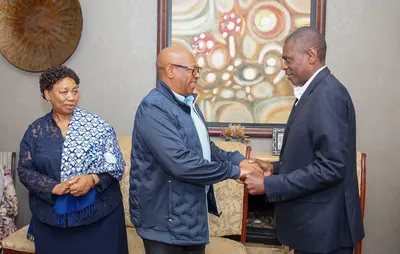


Prof. Ibrahim Gambari, former United Nations Under-Secretary-General, has called on the Nigerian government to invest significantly in the country’s media, diplomatic infrastructure, and cultural industries. He believes this investment is essential for improving Nigeria’s international image and countering foreign narratives.
Gambari made this appeal on Friday during the inaugural Annual Diplomacy Day, where Dr Mkpe Abang presented his book, Weapons of Mass Manipulation: State Media, Global Influence and the New Diplomacy of Power. He warned that without effort, Nigeria and other African nations risk remaining marginalised in global decision-making, as foreign powers continue to define the continent’s portrayal on the world stage.
He stressed that Nigeria cannot aspire to take a leading role internationally while relying on others to tell its story. Gambari, who served as Minister of External Affairs, pointed to the United Nations Security Council, where African nations struggle to influence discussions on continental conflicts, often leaving this task to Western countries like Britain and France.
“The nations holding the pen draft the resolutions on Africa, not the African members,” he remarked, emphasising the impact this has on the narrative surrounding the continent.
Despite Nigeria’s vast population, cultural clout, and natural resources, Gambari noted that negative narratives often overshadow its international image. He attributed this to inadequate funding for foreign missions, weak diplomatic institutions, and poor coordination of diaspora resources.
He urged the government to enhance the Nigerian Television Authority and other public broadcasters into credible international platforms, drawing parallels with organisations like the BBC World Service and Deutsche Welle. He called for these media outlets to be well-funded, independent, technologically modern, and used to share authentic narratives rather than serve as tools for government propaganda.
Gambari also highlighted the potential of Nollywood, Afrobeats, and other creative industries to bolster Nigeria’s soft power. Regarding UN reforms, he insisted that Africa deserves at least two permanent seats on the Security Council, warning that Nigeria could lose its chance if it does not enhance its diplomatic clout.
He proposed a decade-long strategy aimed at establishing a respected international broadcasting institution by 2036, strengthening Nigeria’s diplomatic capacity, and building a more balanced international image. He cautioned against merely complaining about negative coverage, stating that “the world is not waiting for Nigeria to get its narrative together.”
In reviewing Abang’s book, former Nigerian Ambassador to Russia, Prof. Abdullahi Shehu, described it as a significant contribution to the discourse on Nigeria’s international standing and the role of state media in diplomacy. He highlighted that without a credible voice, silence becomes a powerful message.
Oladile Adeleke, representing the Minister of Foreign Affairs, mentioned the need for strategic communication in modern diplomacy. Former Cross River State Governor, Liyel Imoke, added that the book should prompt Nigerian policymakers to enhance the country’s international communication strategies.
The National President of the Association of Retired Career Ambassadors of Nigeria called for broadcasters, particularly the Nigerian Television Authority, to expand their international audience beyond the diaspora, arguing that effective outreach requires building trust with non-Nigerian viewers.
In response, Abang clarified that the book does not advocate for propaganda but encourages Nigeria and other African nations to develop the capability to share their own perspectives globally, warning that failure to do so allows others to misrepresent their narratives.