




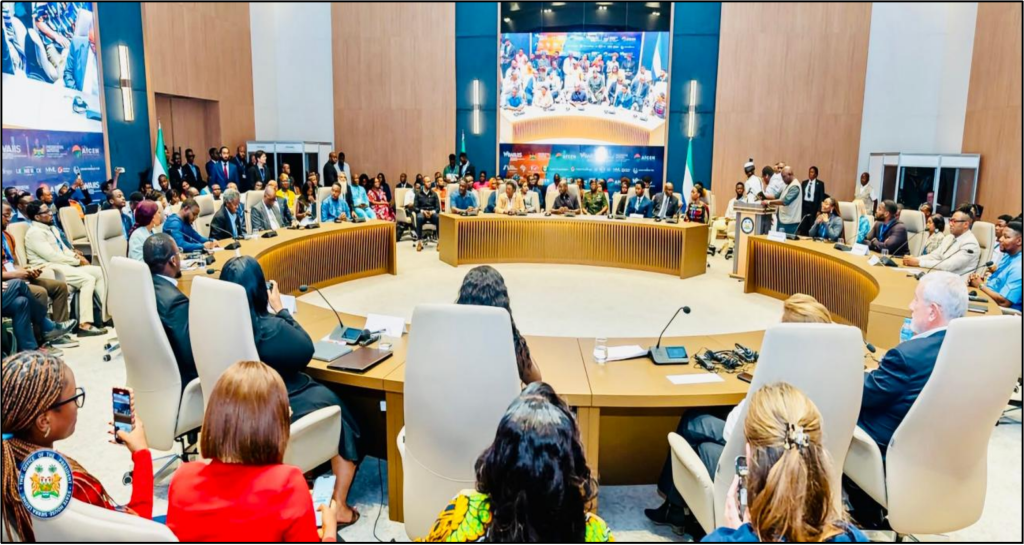
Four agreements were signed and three regional initiatives launched on the second day of the inaugural West Africa Integration and Investment Summit (WAIIS) 2026, held from 16 to 18 November at the Julius Maada Bio International Conference Centre in Lungi. The summit aims to enhance transport, energy, agriculture, and economic integration across West Africa.
On 17 November, the summit revealed plans for a deep-water port and railroad in Sierra Leone, a coastal shipping service, and electricity transmission lines for mining operations. The highlighted initiatives include a cross-border industrial corridor, a national agricultural programme supported by the World Bank, and a regional fund to mobilise $1 billion for agriculture and rice production.
The most noteworthy infrastructure projects include a deep-water port for Banana Island and a logistics hub at Kent, with plans to connect these facilities to Sierra Leone’s mining regions. Dangote Industries and Afreximbank have partnered with Gento Group of Companies to develop this project, valued at approximately US$2.7 billion. However, this estimate does not confirm secured financing.
Another memorandum of understanding aims to develop a coastal shipping service from Freetown along the West African coast, targeting a faster alternative to current road transport, which is costly and inefficient. No funding amounts for this initiative have been specified.
Additionally, Sierra Leone’s Ministry of Energy and Ministry of Mines signed an agreement for developing electricity transmission lines along the Northern Transmission Corridor to enhance power supply to mining operations, although costs and timelines remain undisclosed.
A separate road improvement initiative has begun, with a contract signed for upgrading and tolling the Ring Road in Freetown. The exact investment amount was not mentioned.
Summit participants also prioritised the Mano River Union Strategic Economic and Industrial Corridor, which encompasses five priority projects worth around US$600 million, impacting Côte d’Ivoire, Guinea, Liberia, and Sierra Leone. The projects focus on renewable energy, port logistics, agro-processing, and a digital customs system.
Two agriculture-related initiatives were launched: the Sierra Leone AgriConnect Compact, backed by a $40 million World Bank grant, aims to strengthen agricultural value chains, while the Agribusiness and Rice Sovereignty Facility, supported by various regional organisations, seeks to mobilise US$1 billion for agriculture in West Africa, with $500 million dedicated to rice production.
The ambitious outcomes from WAIIS 2026 aim to align national priorities with regional trade and investment. However, the challenge will be transitioning from agreements to tangible projects that can be funded and implemented for the benefit of local communities and businesses across West Africa.


