





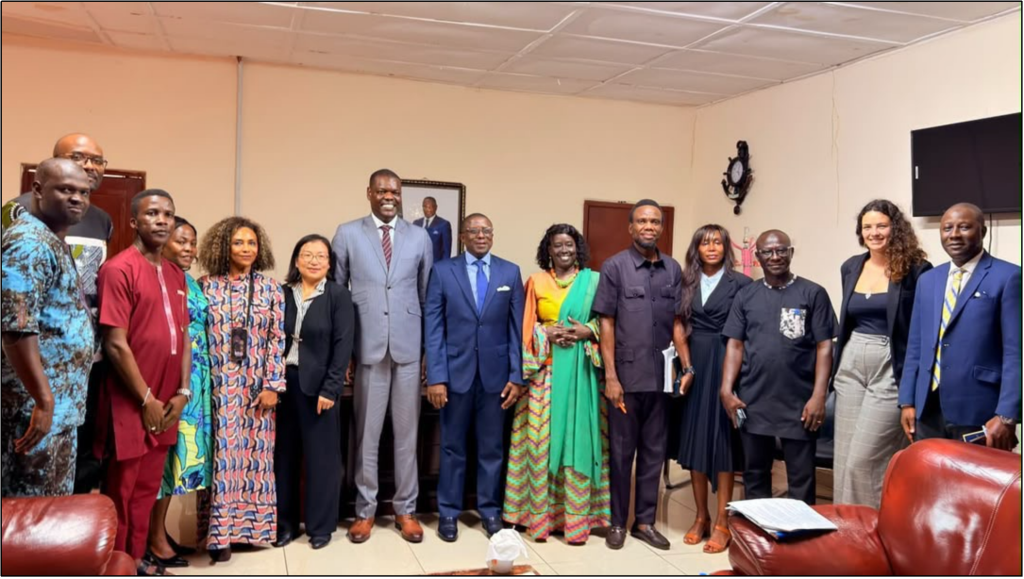
The Ministry of Employment, Labour and Social Security (MELSS) has met with the United Nations Economic Commission for Africa (ECA) to explore how to expand health insurance and social protection for workers in Sierra Leone, particularly in the informal sector.
The talks highlighted gaps in health coverage and ways to create a more sustainable health financing system. Current figures indicate that over 80 per cent of the country’s workforce is in the informal sector, often without access to formal insurance or social security. Aboubakri Dias, Chief of Staff to the Executive Secretary and leader of the ECA delegation, stressed the need for the government to prioritise health financing as an economic issue rather than solely a social one.
Dias noted that decreasing support from international development partners has revealed flaws in health financing across Africa. Families frequently carry a heavy financial burden for healthcare, which may drive them into poverty if illness strikes. He presented the ECA’s Sustainable Health Financing Initiative, aimed at helping governments incorporate health priorities into economic planning and mobilise domestic resources. The initiative also seeks to enhance data systems and explore innovative financing avenues.
Proposed measures include targeted levies, efficient public spending, and debt-swap agreements. Dias also mentioned the potential for regional collaboration to improve healthcare access and facilitate the movement of health professionals, highlighting the African Continental Free Trade Area (AfCFTA) as a means to enhance cross-border access to healthcare and recognise health workers’ qualifications across the continent.
Minister Hon. Umaru Napoleon Koroma, Esq., called the extension of health insurance and social protection to all workers urgent. He pointed out the risks faced by workers in hazardous sectors like mining, which expose them to occupational health issues and injuries. Koroma referenced the ongoing development of the National Health Sector Strategy Plan 2026-2030, stressing the need for frameworks that support workers from all sectors, including informal workers like commercial bike riders, who often face risks such as road accidents and limited access to formal insurance.
Director of Social Protection Duraman Songo remarked that many workers lack adequate coverage under current social security measures. He advocated for social protection that encompasses informal employment and better coordination among government bodies. Songo also underscored the importance of information sharing and inclusive consultations to ensure that policies meet workers’ needs.
Pamela Kakande, an ECA Statistician, emphasised the importance of reliable data for monitoring labour and social protection policies, which can help identify coverage gaps and shape effective measures to enhance occupational health and safety. Participants also discussed the institutional arrangements needed for the proposed universal health coverage agency and improved collaboration between the Ministries of Employment, Labour and Social Security and Health.
This engagement is part of the ECA’s ongoing consultations with government institutions and stakeholders that began in October 2023, aiming to enhance health financing, provide better protections for workers, and move towards universal health coverage in Sierra Leone.


