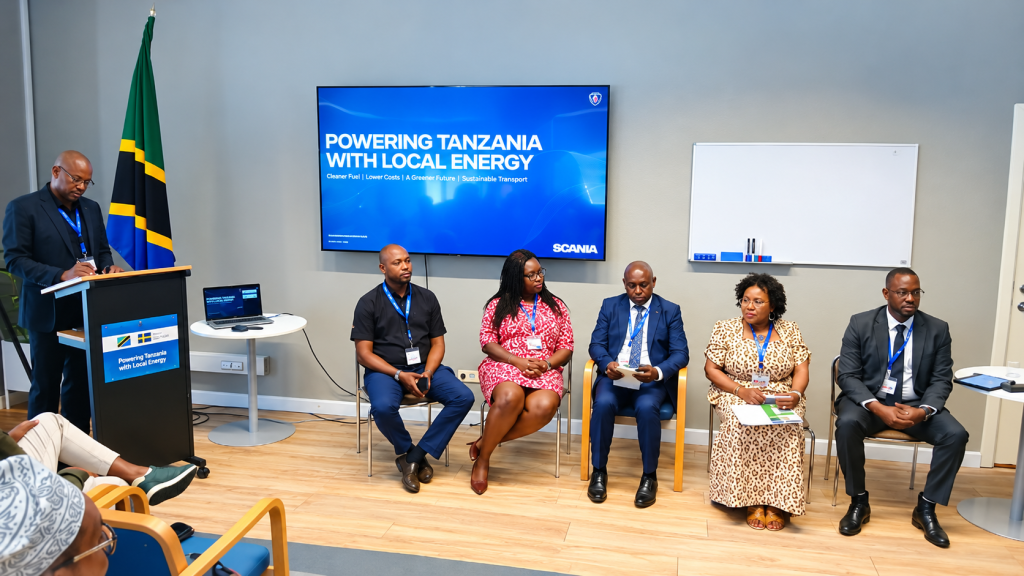
Stakeholders from both the government and private sector have called for increased investment in Compressed Natural Gas (CNG) infrastructure to boost the adoption of natural gas-powered vehicles in Tanzania. During a panel discussion at the Swedish Embassy in Dar es Salaam on 30 October 2026, they highlighted that expanding CNG use could help reduce Carbon Dioxide (CO₂) emissions and lower transport costs.
They emphasised that adopting CNG would lessen reliance on traditional fuels, enhance operational efficiency, and support Tanzania’s shift to more sustainable transport solutions. Participants included energy experts, transport operators, and investors, who examined the challenges and potential of broader CNG implementation.
Engineer Shukurani Rugaimukamo from the Ministry of Energy noted the advancements in Tanzania’s natural gas infrastructure, particularly pipeline networks that could increase gas access. He urged for collaboration between the government and businesses to maximise existing resources and extend the gas distribution network.
The group acknowledged that a key issue for transport operators is the limited availability of CNG refuelling stations. They stressed the importance of increasing the number of these facilities and improving financing options to encourage investment in natural gas-powered vehicles.
Despite Tanzania’s substantial natural gas reserves, challenges including insufficient infrastructure, high initial costs, and low public awareness hinder wider adoption. Engineer Joyce Kisamo and Civil Engineer Franklin Luvuva reinforced the need for technical training and equitable sharing of economic benefits with the public.
Benedict Ndunguru, Commercial Head at Puma Energy, highlighted the crucial role of financial institutions in funding CNG infrastructure and ensuring access to capital for establishing refuelling stations.
The panel also discussed operational aspects of CNG vehicles, including safety, maintenance, and skilled personnel availability. Participants noted that CNG vehicles can significantly reduce harmful emissions compared to diesel, aiding companies in meeting environmental standards and aligning their operations with sustainability goals.
Tamara Nerima, Marketing Director at Scania Tanzania, called for ongoing collaboration among vehicle manufacturers, government agencies, and transport operators to create a supportive environment for CNG-powered transport. They also urged for greater public awareness to address safety concerns and promote the economic benefits of natural gas technology.
The discussion included representatives from Scania Tanzania, Puma Energy, the Dar es Salaam Rapid Transit Agency (DART), and other stakeholders, all advocating for significant investment and support in the natural gas sector.