



The discourse around ethical AI has gained traction recently, with organisations outlining commitments to fairness, transparency, inclusion, and human oversight. However, without a standard to measure these principles, they risk becoming empty promises.
In the financial sector, accountability must be paramount due to the personal impact of decisions made by AI systems. These decisions can determine credit eligibility, insurance pricing, or even advice given to households. For institutions, this is a mere prediction; for individuals, it can open new opportunities or close them off entirely.
We advocate that whenever AI influences significant life decisions for customers or employees, individuals must be able to comprehend how these outcomes were reached. They should also have access to proper channels to raise concerns and trust in the institution’s accountability, not solely rely on the algorithm.
At Old Mutual, we maintain clear principles for the design, deployment, and oversight of AI to ensure our systems remain trustworthy and aligned with our values and goals. Such governance is not a hindrance to innovation; rather, it guarantees that innovation can be trusted.
In May, Fundi Tshazibana, Deputy Governor of the South African Reserve Bank, asserted that financial institutions must explain decisions influenced by AI. We concur and stress that explanations hold little value if individuals cannot act on them.
A meaningful explanation does not require disclosing source code but should clarify what information influenced a decision and how outcomes could differ. Institutions can acquire models but must retain accountability for decisions based on them.
As Group Chief Human Capital and Corporate Affairs Officer, I argue that this standard also applies internally, as AI systems increasingly shape human resources operations—managing recruitment, onboarding, pay, and employee support. When technology impacts an employee’s career, our fairness standards should be as stringent as those for customers. Employees deserve clear, understandable decisions, meaningful options to contest outcomes, and assurance that a human is ultimately accountable. Algorithms should enhance decision-making, not replace judgment or responsibility. In an AI-driven workplace, fairness and transparency are essential to maintain trust.
This issue cannot be sidelined or treated as a minor concern. The ethical standards that govern our customer interactions must also apply to how we treat our staff. A failure to uphold these principles internally will undermine our credibility externally. A workforce that lacks confidence in decision-making processes will struggle to build the trust essential for customer relationships. Trust is interconnected—if fairness and transparency are compromised within an institution, they will also be called into question externally.
The responsible use of AI is not merely about compliance; it reflects the character of organisations. Those who thrive in the AI era will be the ones who utilise technology to enhance human dignity, merging intelligent systems with the empathy and accountability that can only come from people.
Africa possesses a unique opportunity to approach AI thoughtfully, using it to broaden access, enhance productivity, improve service provision, and foster talent. While the pace of AI adoption remains uncertain, its influence on how organisations operate is undeniable. The challenge lies not in whether AI will impact our future, but in how responsibly we choose to implement it.
Trust is foundational for sustainable AI adoption. The advantages of AI can only be achieved if employees and customers believe that the systems affected are fair and accountable. This necessitates robust governance of data use, meaningful oversight of significant decisions, protections against bias, and strict privacy measures. While technology can amplify human abilities, it should uphold human dignity.
For African organisations, the challenge is to embrace AI wisely. We must leverage its potential to enhance customer experiences and financial inclusion while diligently safeguarding the rights of those we serve and employ. The institutions that succeed will be those that balance innovation with careful governance.
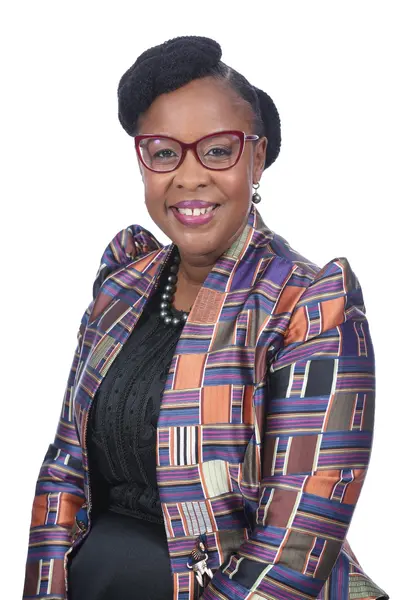
Celiwe Ross is the Group Chief Human Capital and Corporate Affairs Officer at Old Mutual. She will speak at the Singularity Summit 2026 at Sandton Convention Centre on 21 and 22 October, alongside sponsors Google Cloud and the Industrial Development Corporation (IDC). For more details, visit https://singularitysouthafricasummit.org/.