





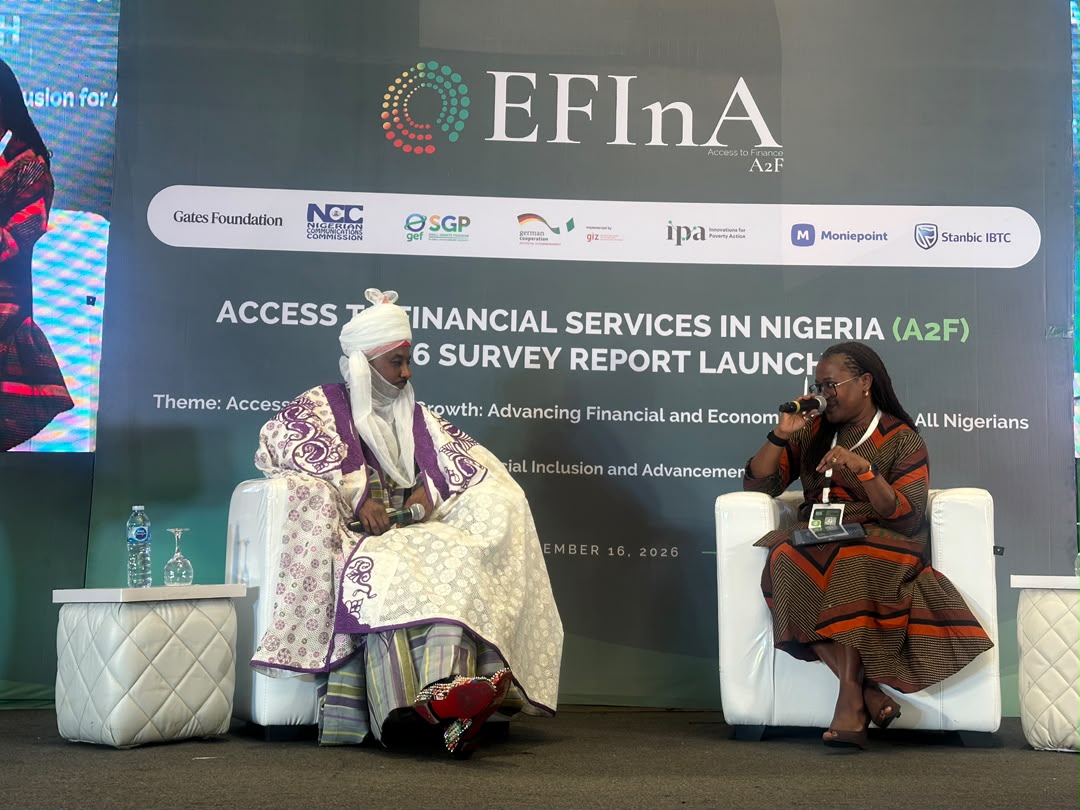
Sanusi Lamido, the Emir of Kano and former Governor of the Central Bank of Nigeria, has urged for a stronger link between Nigeria’s financial system and the real economy. Speaking at the launch of the Access to Financial Services 2026 Report in Abuja on Wednesday, he highlighted the need for financial institutions to foster economic growth beyond just facilitating transactions.
Mr Sanusi stressed that sound fiscal and structural policies are essential for attracting investments and boosting the production of goods and services. He argued that the financial sector must directly support sectors such as agriculture and manufacturing, rather than merely serving as a transactional platform.
“Financial institutions do not themselves create the economy,” he said. “To build an economy, you need the right structural policies and an environment that attracts investment.”
He noted the role of fintech companies in bridging the gap between financial transactions and the real economy, suggesting that the Central Bank of Nigeria (CBN) should collaborate with major fintech firms to develop savings and insurance products tailored for Nigerians, especially those in underserved areas.
Mr Sanusi highlighted the importance of using existing financial infrastructure, like the Bank Verification Number (BVN), to enhance access to financial services. He lamented that while the infrastructure is in place, leveraging it effectively remains a challenge.
He urged the CBN to organise discussions between regulators and private-sector players to align efforts in developing effective financial products for consumers. Furthermore, he cautioned that any reforms in the financial sector must be backed by coherent agricultural and economic policies to be effective.
On the topic of financial inclusion, particularly in Northern Nigeria, Mr Sanusi acknowledged the varying stages of development across regions, implying that interventions should be tailored accordingly. He also called for clearer responsibilities among financial regulators to avoid confusion for consumers.
The conversation concluded with a call to measure financial inclusion not just by account access but by how financial services can help households save, manage risks, and engage in the productive economy.